HOME > Weekly Case > Weekly Case
Weekly Case
종결
Case No. 742
2026-01-01~2026-01-31
출제자 : 박상익
Hit : 431
| Period | 2026-01-01~2026-01-31 |
|---|---|
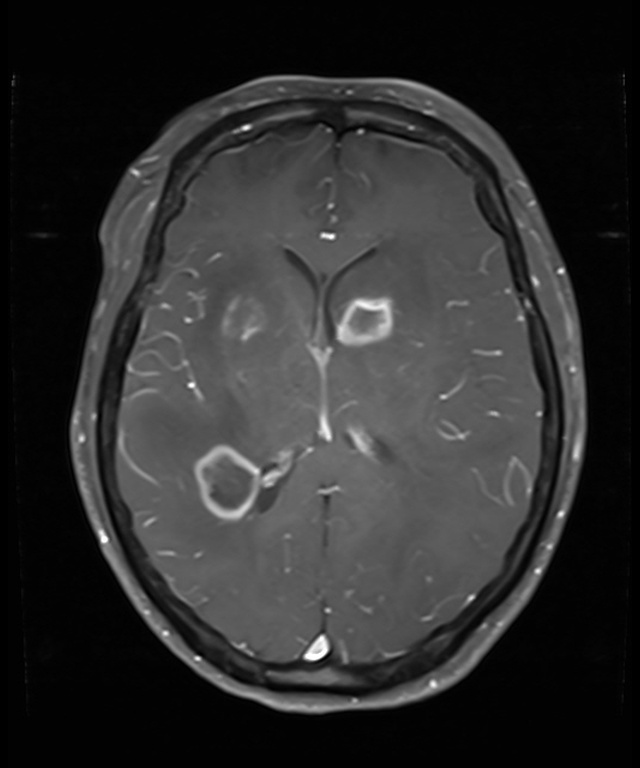
| Diagnosis | Post-transplant lymphoproliferative disorder |
| Gender |
|
| Age | 49 |
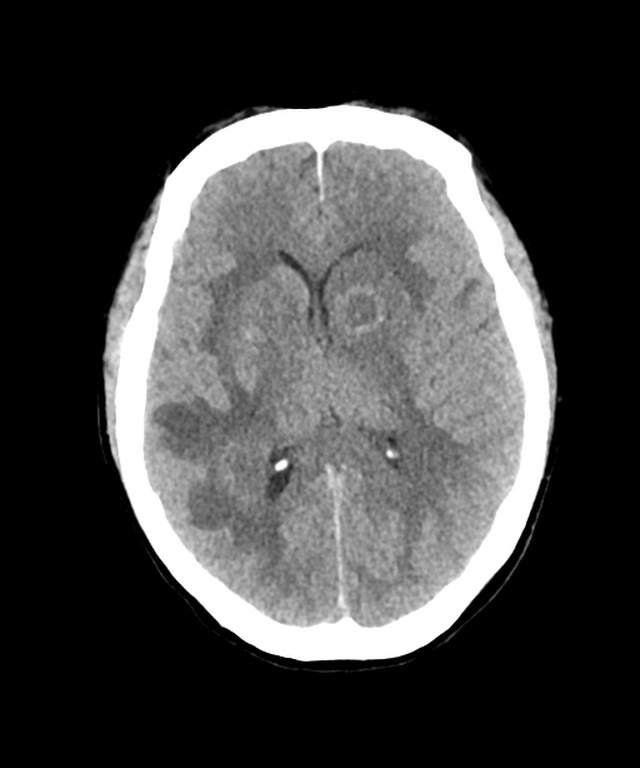
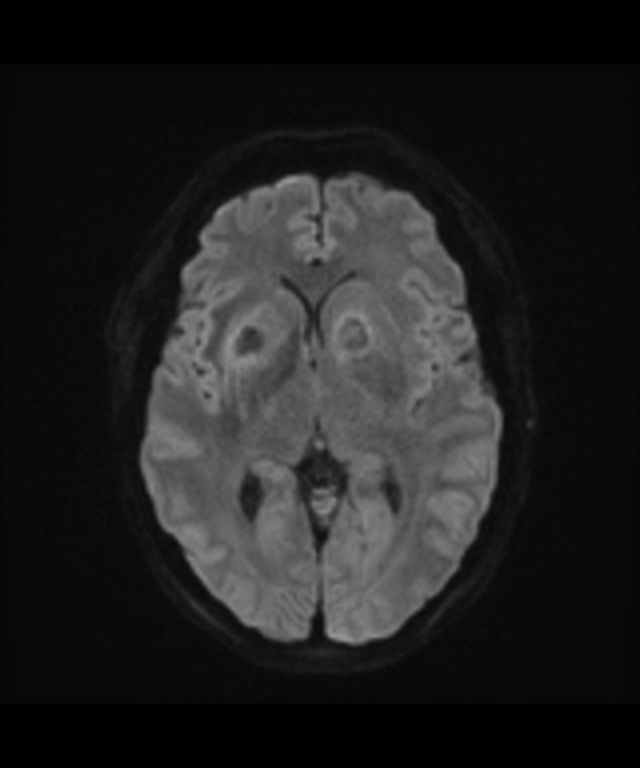
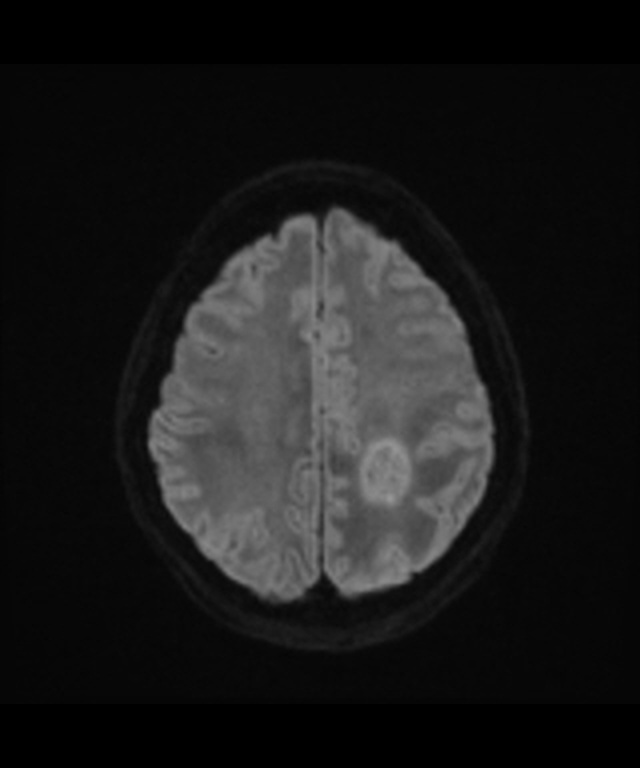
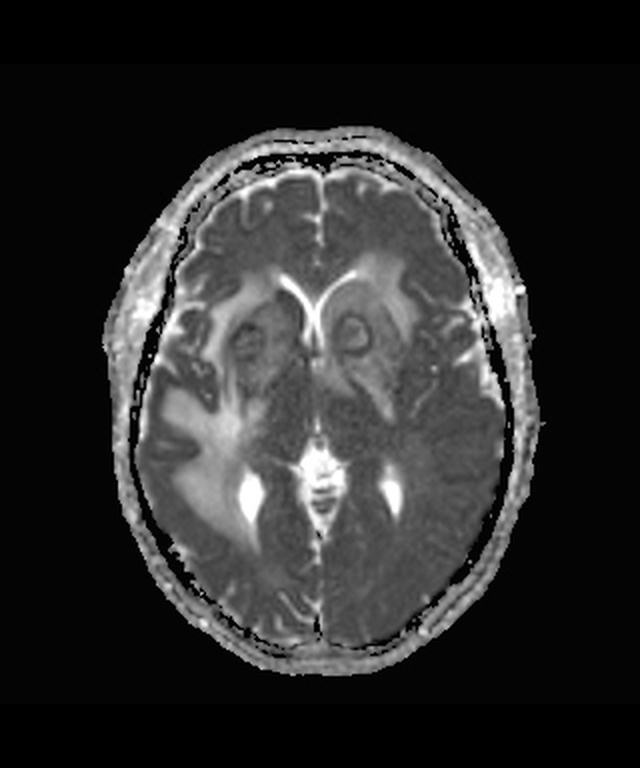
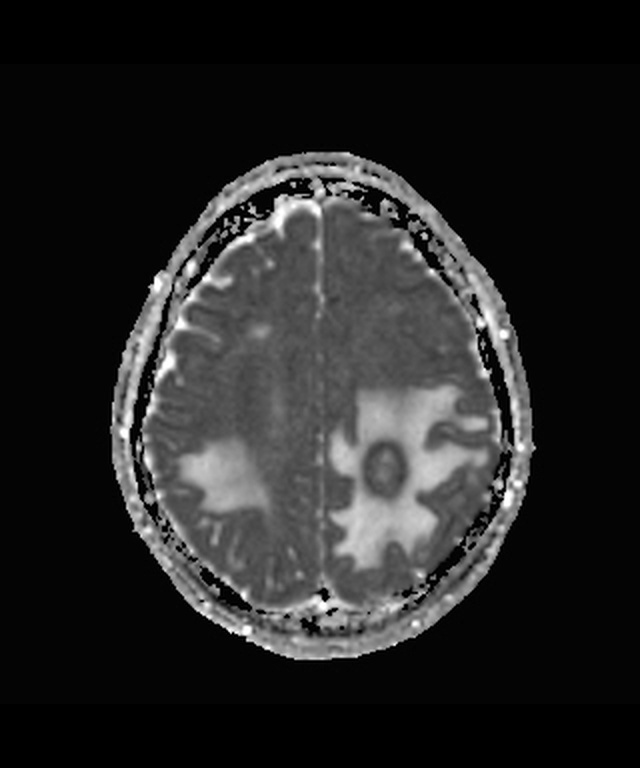
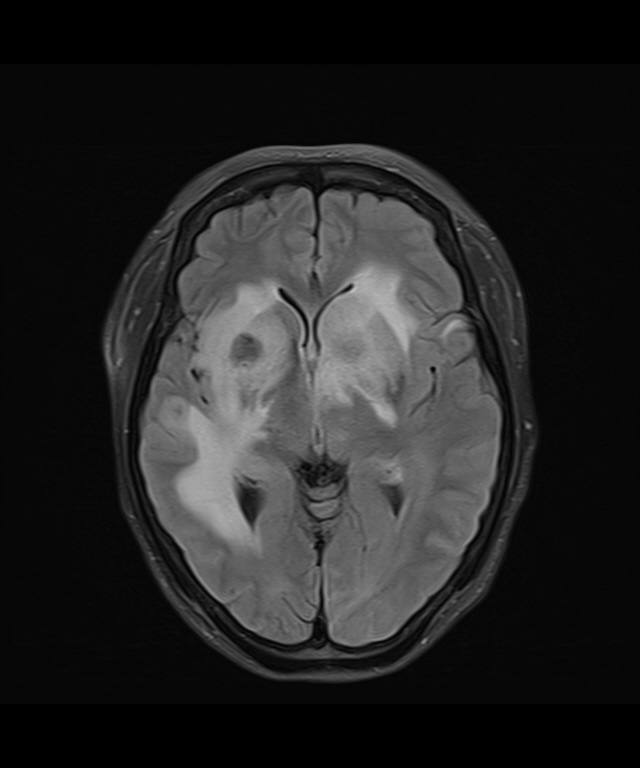
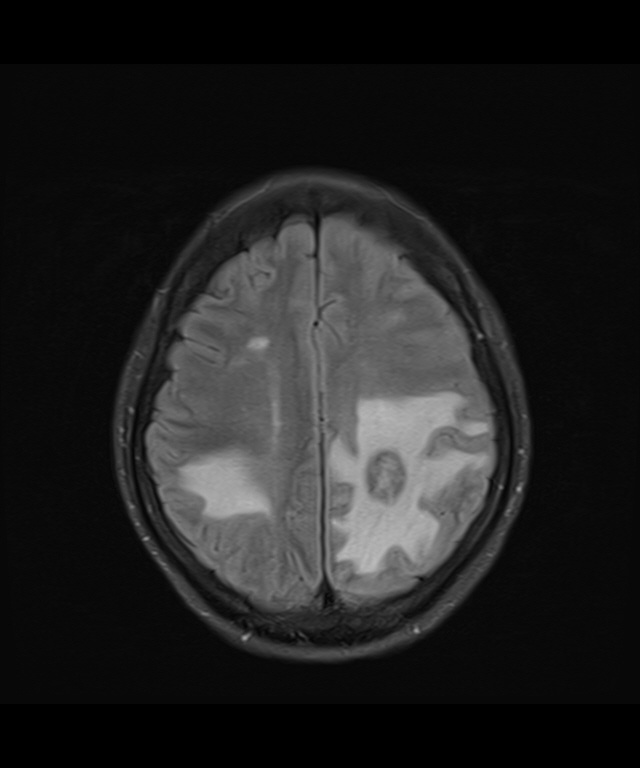
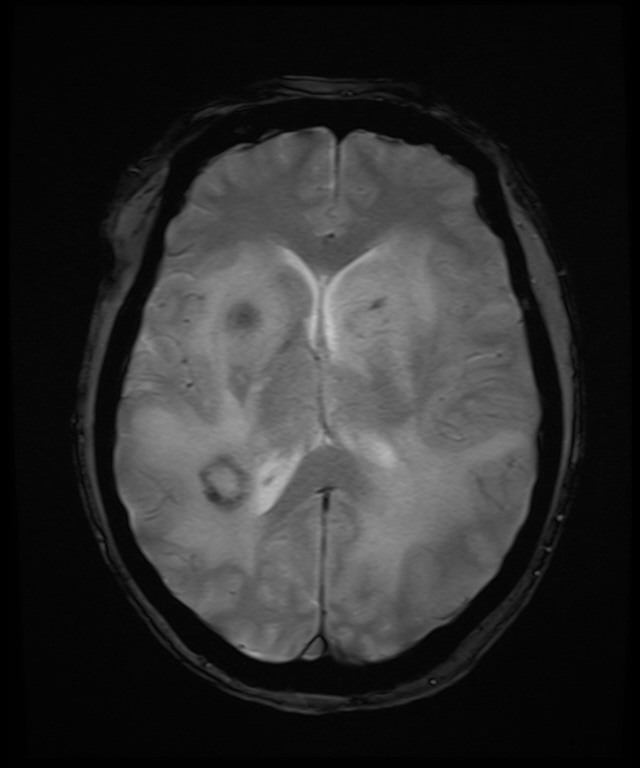
| Clinical information | A 49-year-old female patient with a history of pancreatic transplantation 14 years ago presented with complaints of disorientation. What was the diagnosis? |
| Discussion | CNS PTLD differs from typical primary CNS lymphoma in that it more frequently presents as multifocal lesions with ring or heterogeneous enhancement and a higher tendency for hemorrhage or necrosis, while primary CNS lymphoma usually shows solid, homogeneous enhancement. On diffusion imaging, PTLD may show diffusion restriction but with higher ADC values compared with diffusion restriction seen in conventional CNS lymphoma. CNS PTLD commonly shows punctate or peripheral susceptibility on SWI or GRE. Reference White ML, Moore DW, Zhang Y, et al. Primary central nervous system post-transplant lymphoproliferative disorders: the spectrum of imaging appearances and differential. Insights Imaging. 2019;10:46. |
| Correct answer |
Correct Answer
Semi-Correct Answer |
Submit answer
Answer submission list
The written answers can only be viewed by the administrator and author.