HOME > Weekly Case > Weekly Case
Weekly Case
종결
Case No. 741
2026-01-01~2026-01-31
출제자 : 박상익
Hit : 379
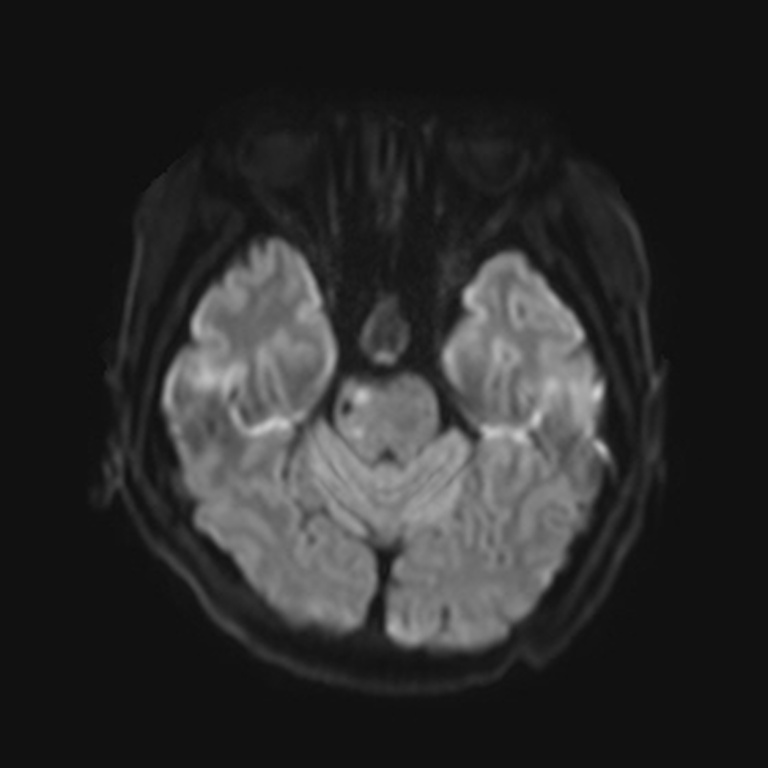
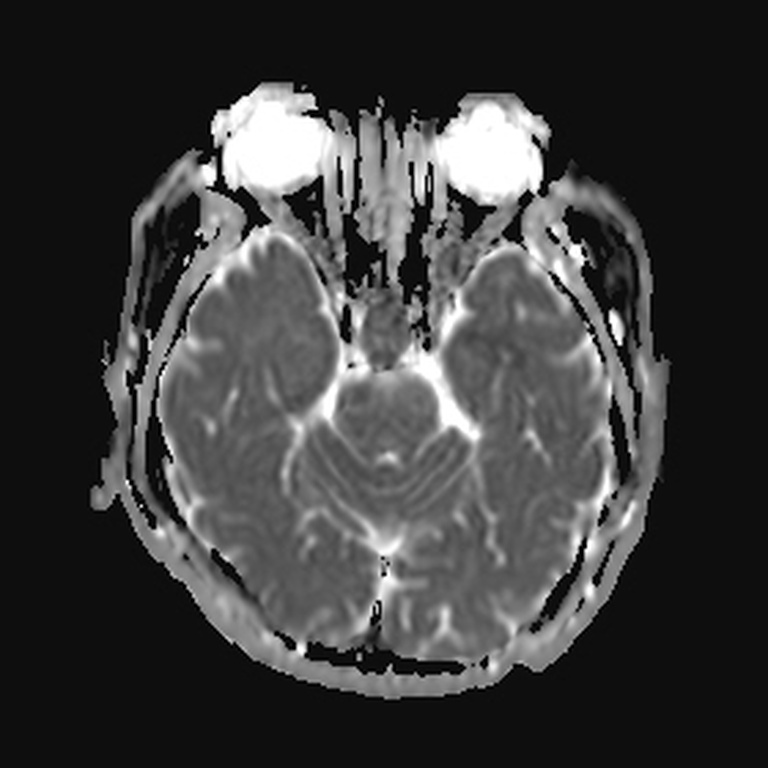
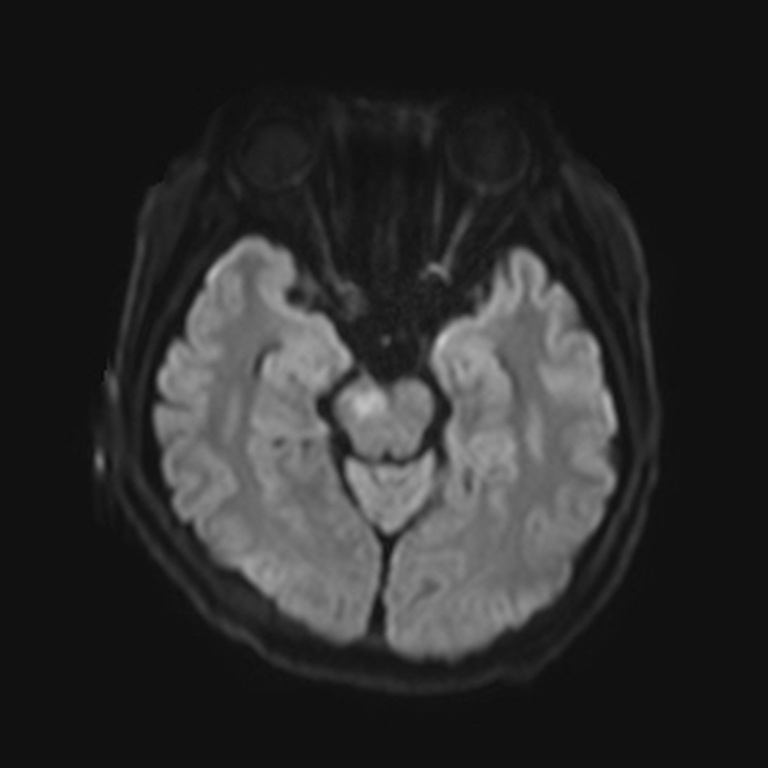
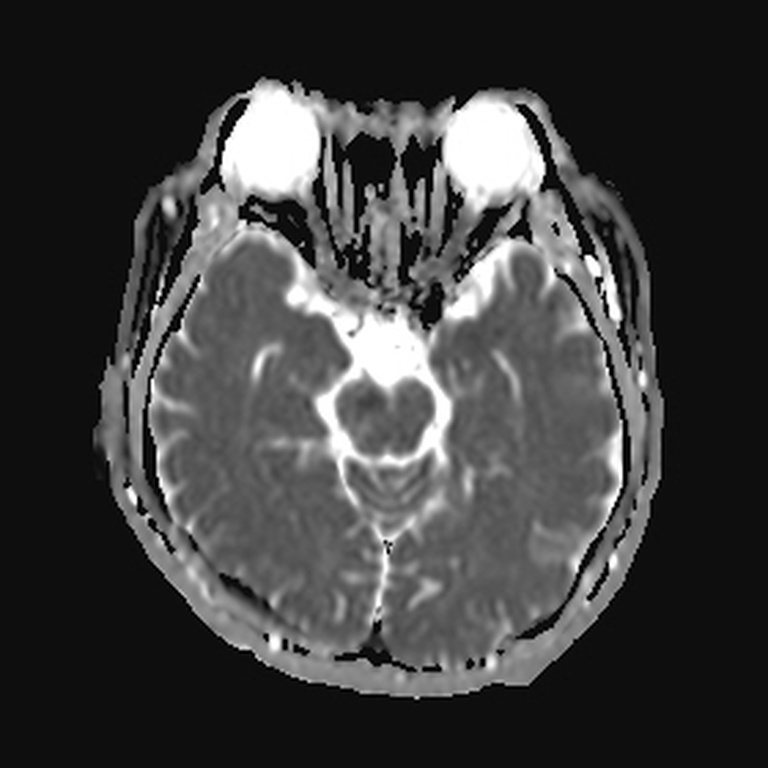
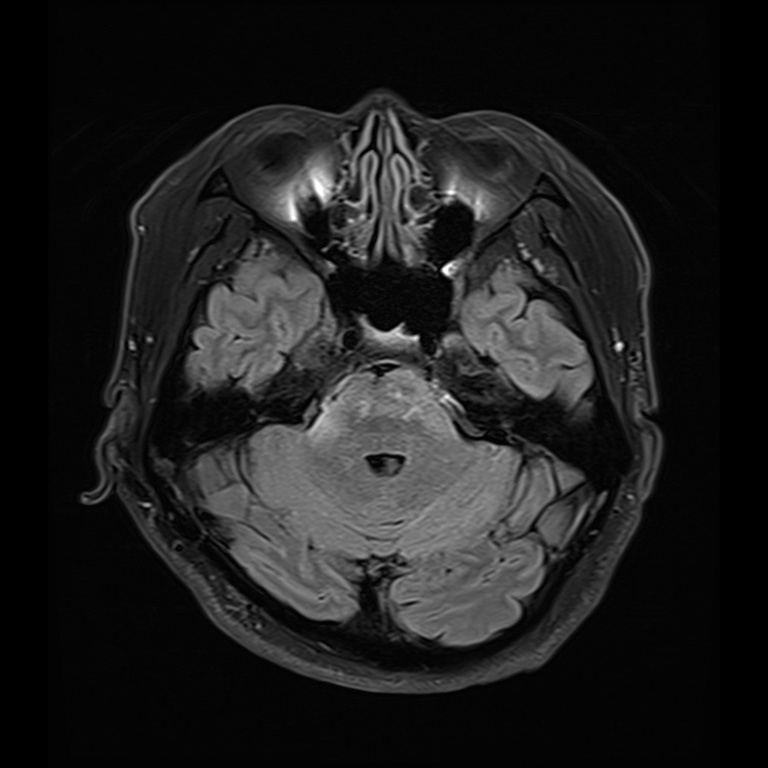
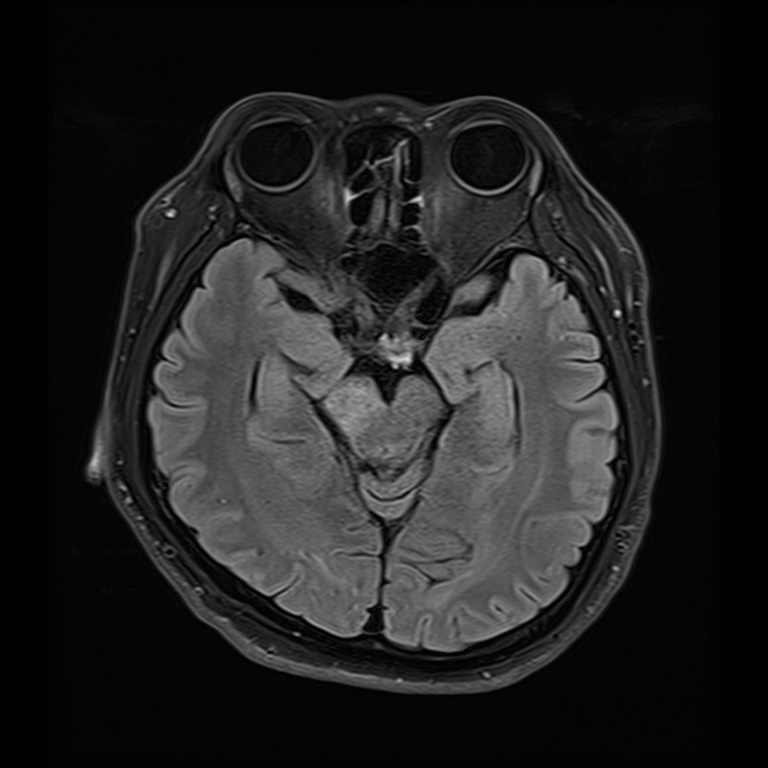
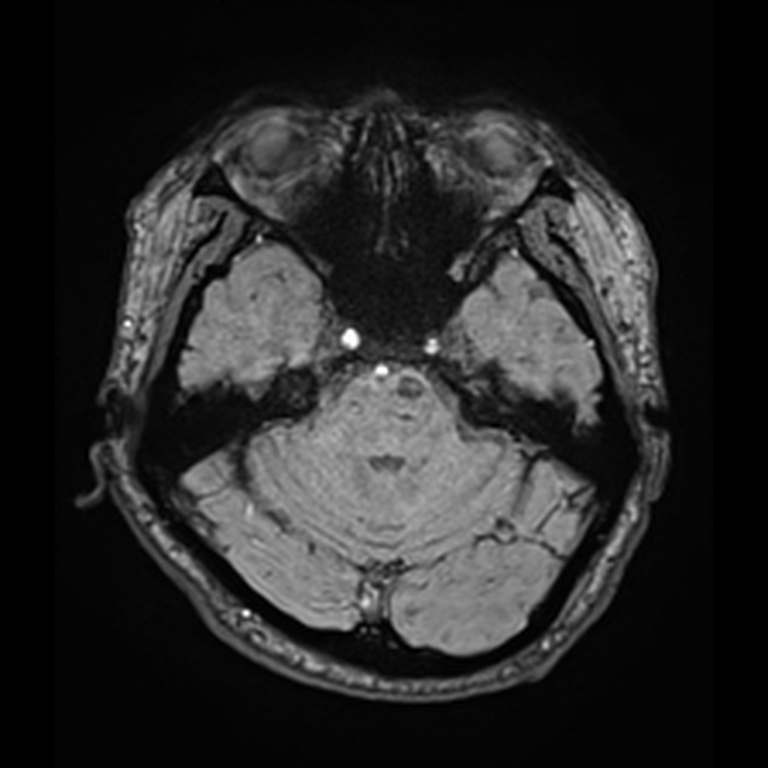
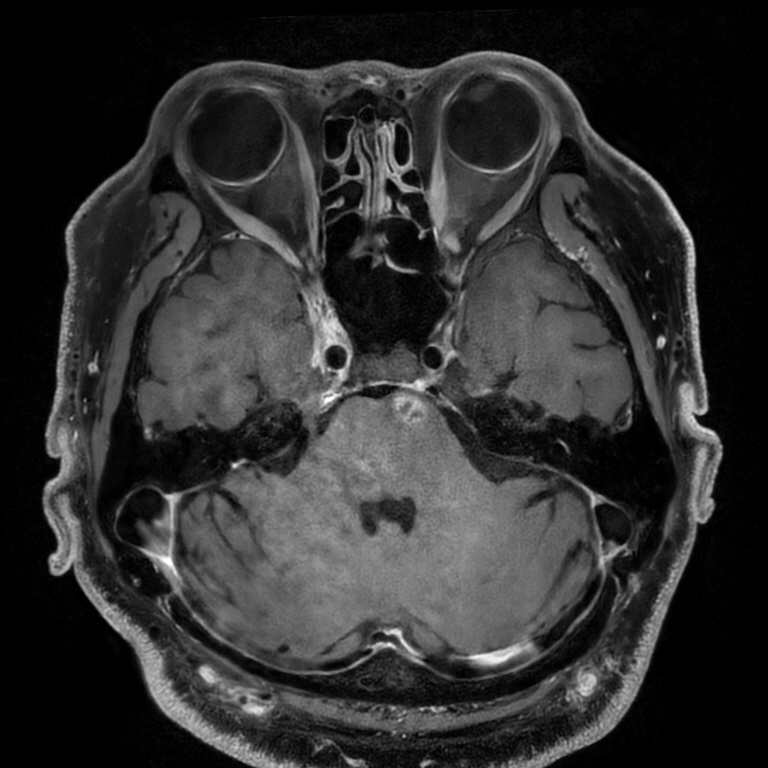
| Period | 2026-01-01~2026-01-31 |
|---|---|
| Diagnosis | Neuro-Behçet’s disease |
| Gender |
|
| Age | 49 |
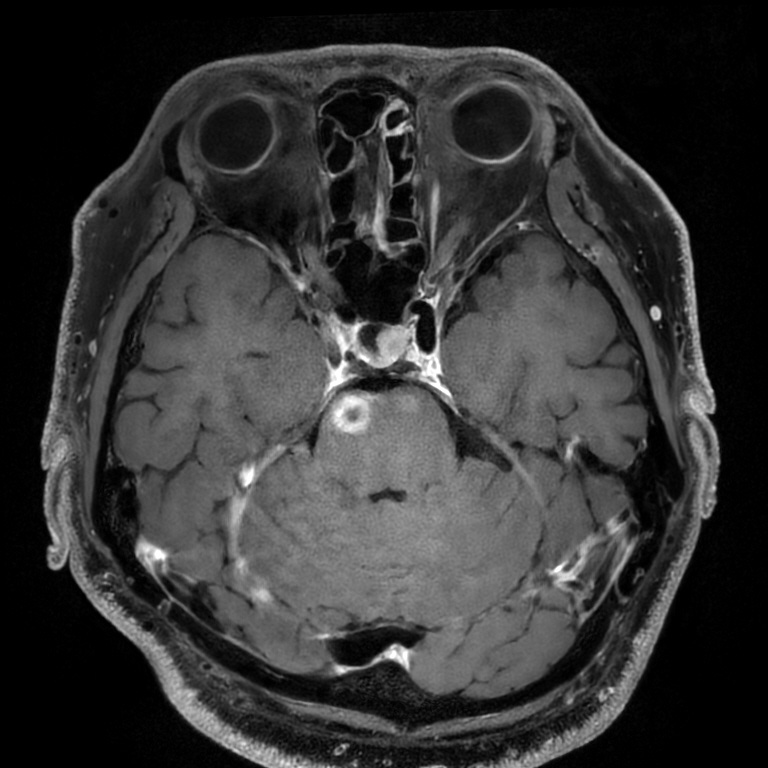
| Clinical information | A 49-year-old male patient presented 12 hours ago with confusional dysarthria. What's your diagnosis? |
| Discussion | The patient was found to have oral and genital ulcers on physical examination, and a terminal ileal ulcer was seen on abdominal and pelvic CT and colonoscopy. Based on these findings, the patient was diagnosed with Behçet’s disease, and symptoms improved after treatment with corticosteroids. Neuro-Behçet’s disease presents as parenchymal lesions caused by venular vasculitis, involving the mesodiencephalic region, internal capsule, pons, and subcortical white matter. MRI shows ill-defined T2/FLAIR hyperintensities with edema and may show patchy or peripheral enhancement, sometimes with petechial hemorrhage. DWI can show variable or peripheral diffusion restriction. Non-parenchymal Neuro-Behçet’s disease reflects vascular involvement, most commonly presenting as cerebral venous thrombosis or, less commonly, intracranial or extracranial aneurysm or arterial dissection. Reference Dutra LA, de Barros G, Bartosini O. Neuro-Behçet’s Disease: A Review of Neurological Manifestations and Its Treatment. J Vasc. 2016;2. |
| Correct answer |
Correct Answer
Semi-Correct Answer |
Submit answer
Answer submission list
The written answers can only be viewed by the administrator and author.