HOME > Weekly Case > Weekly Case
Weekly Case
종결
Case No. 728
2025-08-01~2025-08-31
출제자 : 황인평
Hit : 404
| Period | 2025-08-01~2025-08-31 |
|---|---|
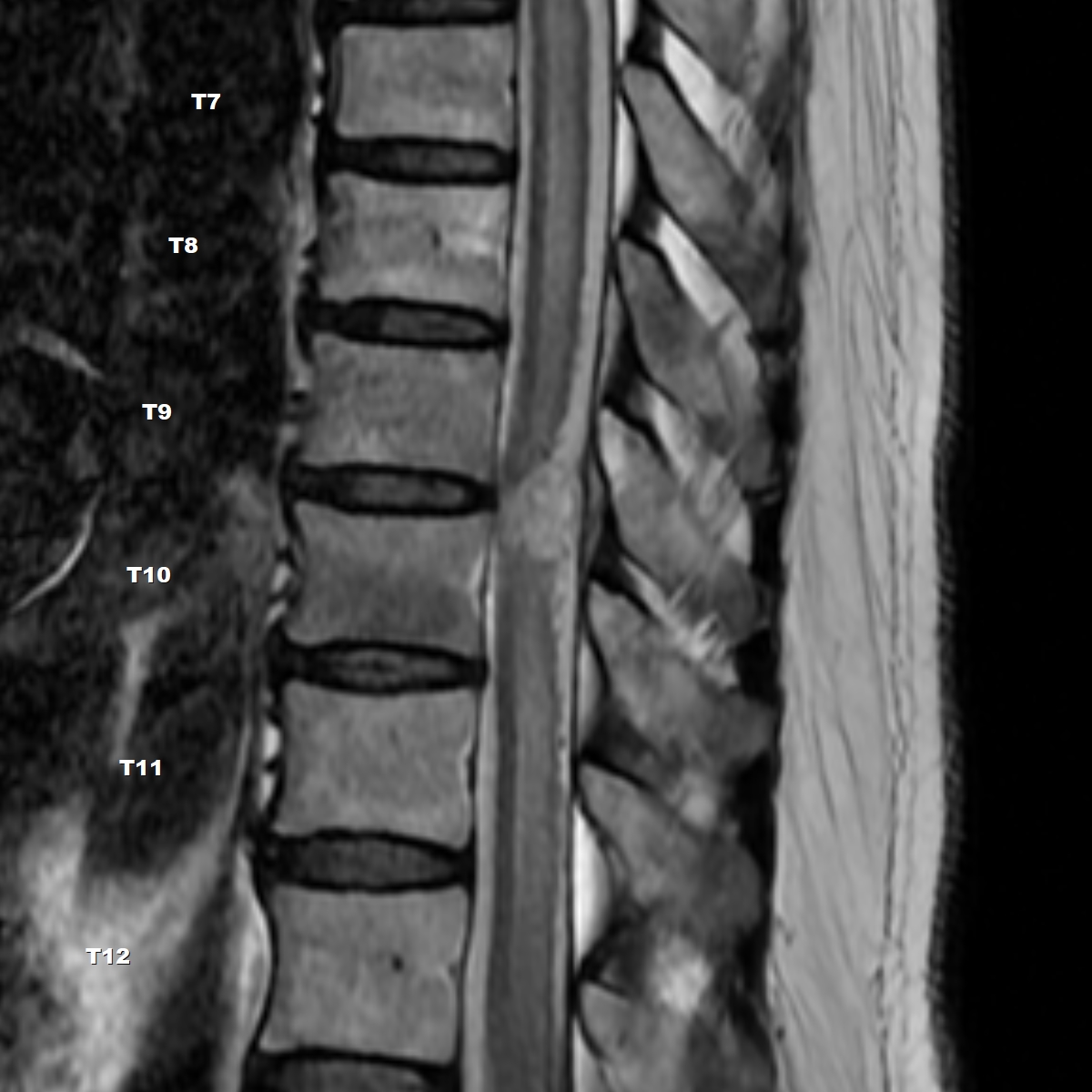
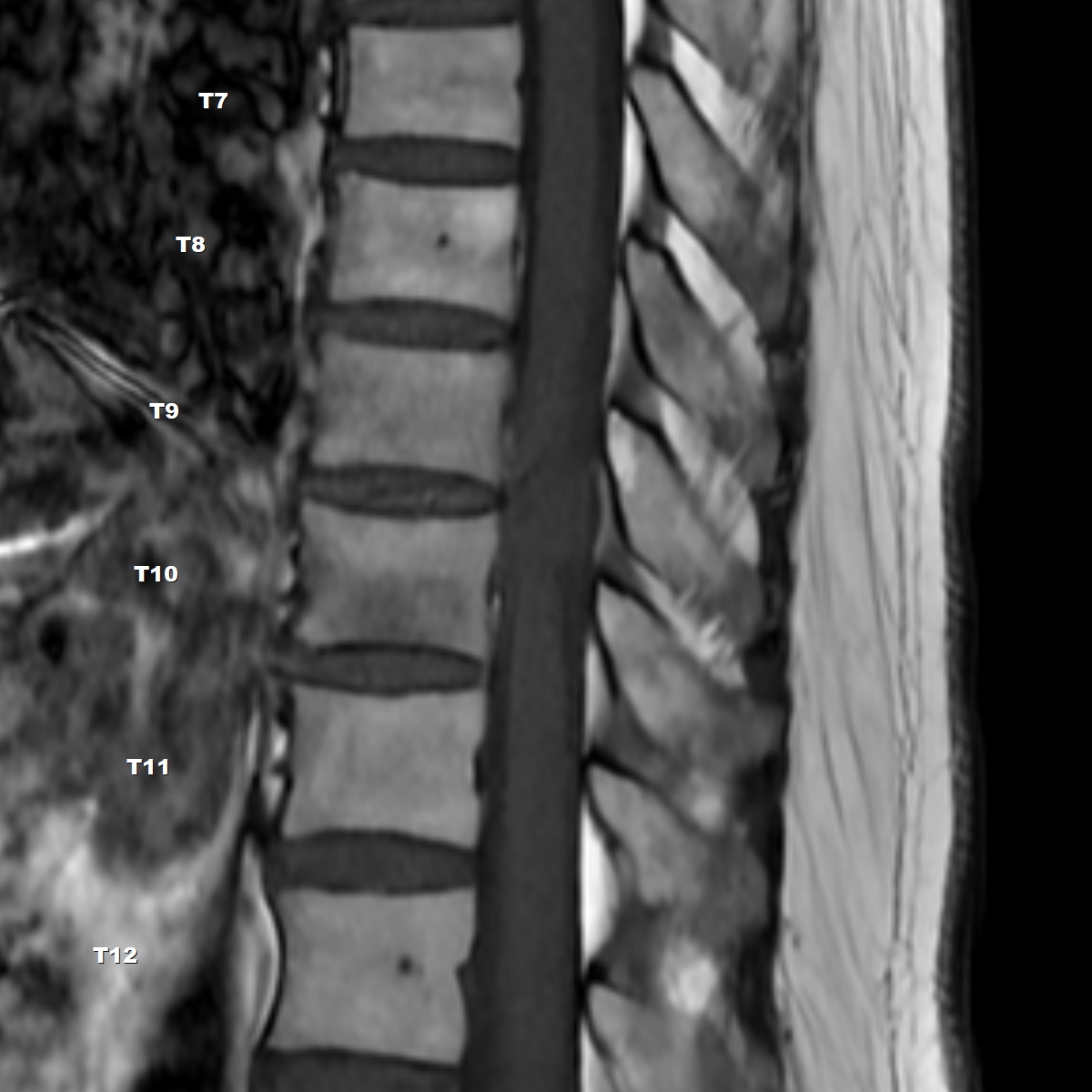
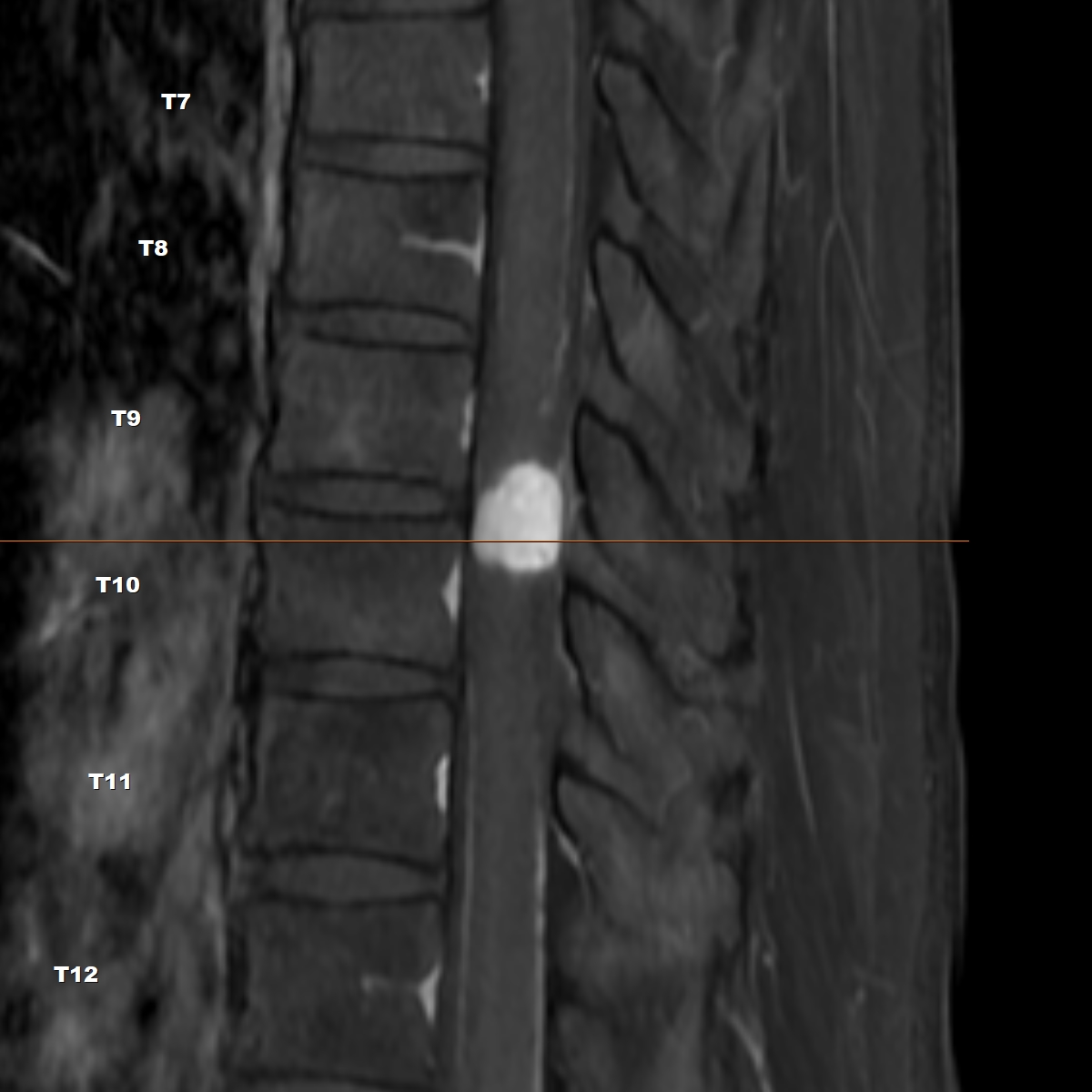
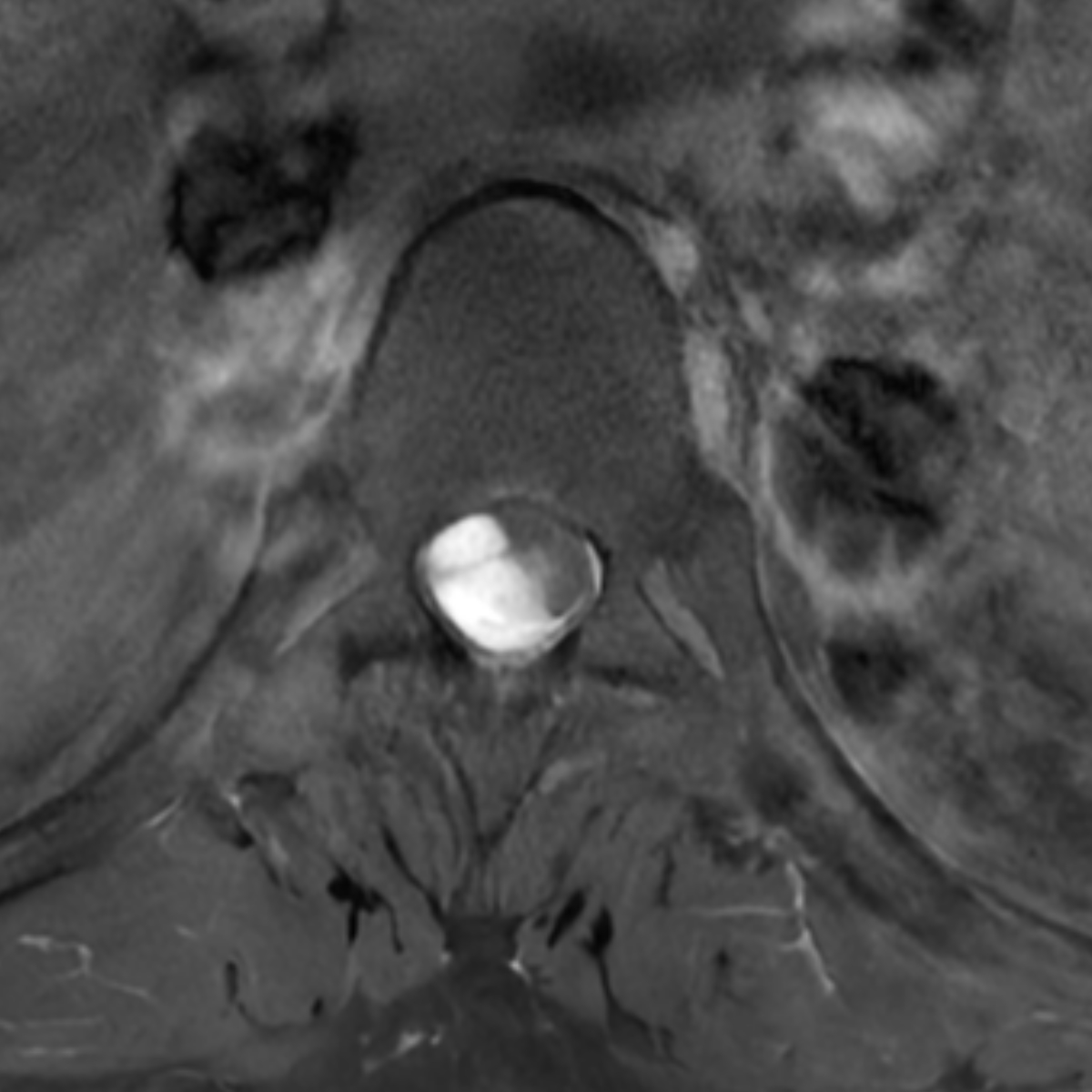
| Diagnosis | hemangioblastoma |
| Clinical information | A 57-year-old woman presented with upper lumbar pain, sensory loss, and progressive gait disturbance that had worsened for approximately one month. What was the diagnosis? |
| Discussion | Epidemiology - 1.6-5.8% of all spinal tumors. - 68% sporadic, 32% associated with VHL syndrome Location - Thoracic (50%) > cervical (40%) > others - Subpial, posterior aspect of spinal cord - Exophytic: originating at or near surface of cord (66%) - Associated with syrinx (40-55%) - Associated with cord enlargement (23%) - Extramedullary (8%) - Intramedullary with no spinal cord reaction (23%) Imaging CE T1w: intense, homogeneous enhancement of the tumor nodule Flow voids seen in larger tumors: prominent feeding or draining vessels May show extensive, long segment cord edema without syrinx. Differential diagnosis AVM, cavernous malformation, hypervascular IM tumors (ependymomas, astrocytoma, metastasis: e.g., renal cell carcinoma), IDEM tumors. Reference Chu BC et al. AJNR Am J Neuroradiol. 2001 Jan;22(1):206-17. Jeffrey S. Ross, Kevin R. Moore. Diagnostic Imaging: Spine, 4th Edition. 2020, pp.814-17 |
| Correct answer |
Correct Answer
Semi-Correct Answer |
Submit answer
Answer submission list
The written answers can only be viewed by the administrator and author.