HOME > Weekly Case > Weekly Case
Weekly Case
종결
Case No. 726
2025-08-01~2025-08-31
출제자 : 황인평
Hit : 323
| Period | 2025-08-01~2025-08-31 |
|---|---|
| Diagnosis | (post-biopsy) infarction of Warthin’s tumor |
| Gender |
|
| Age | 56 |
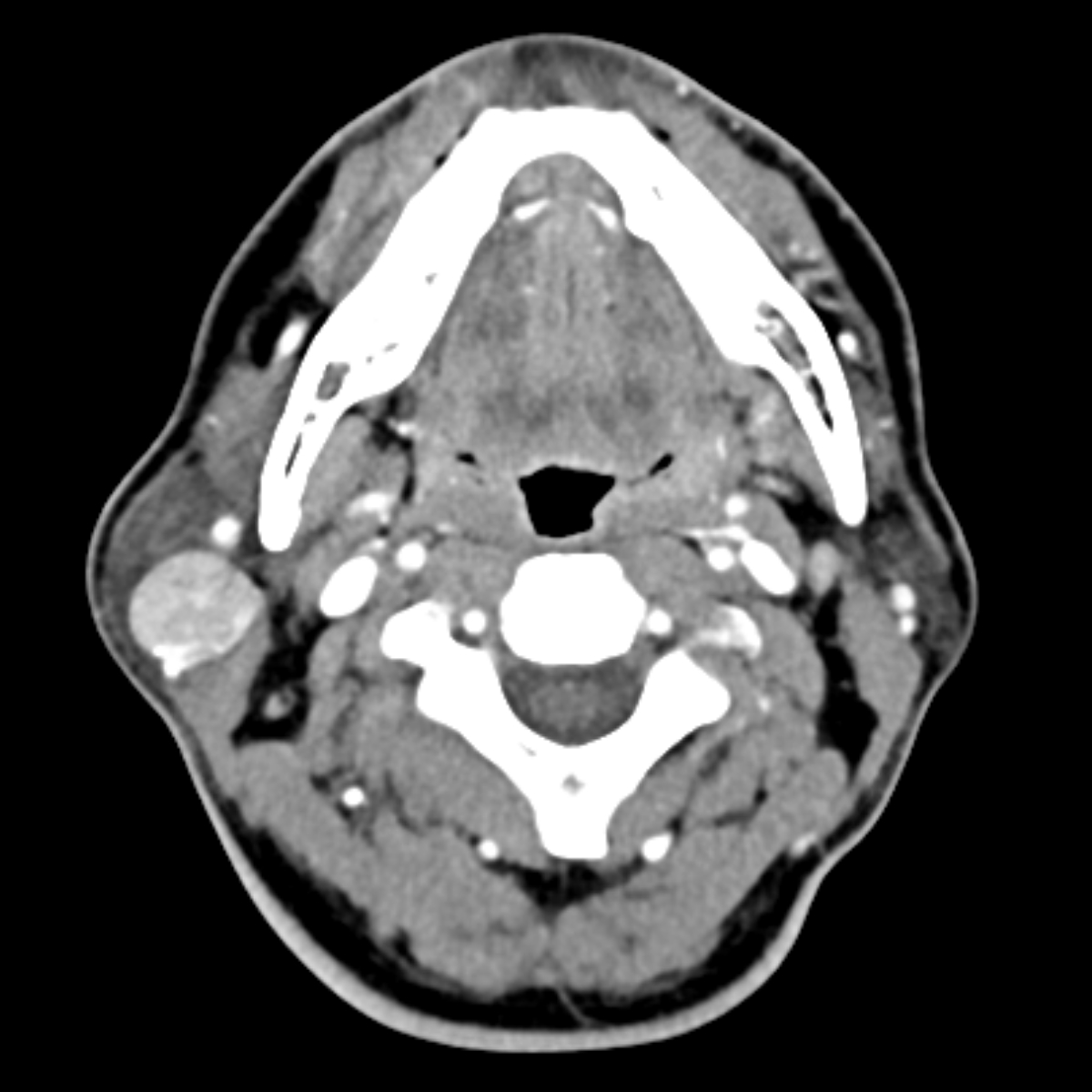
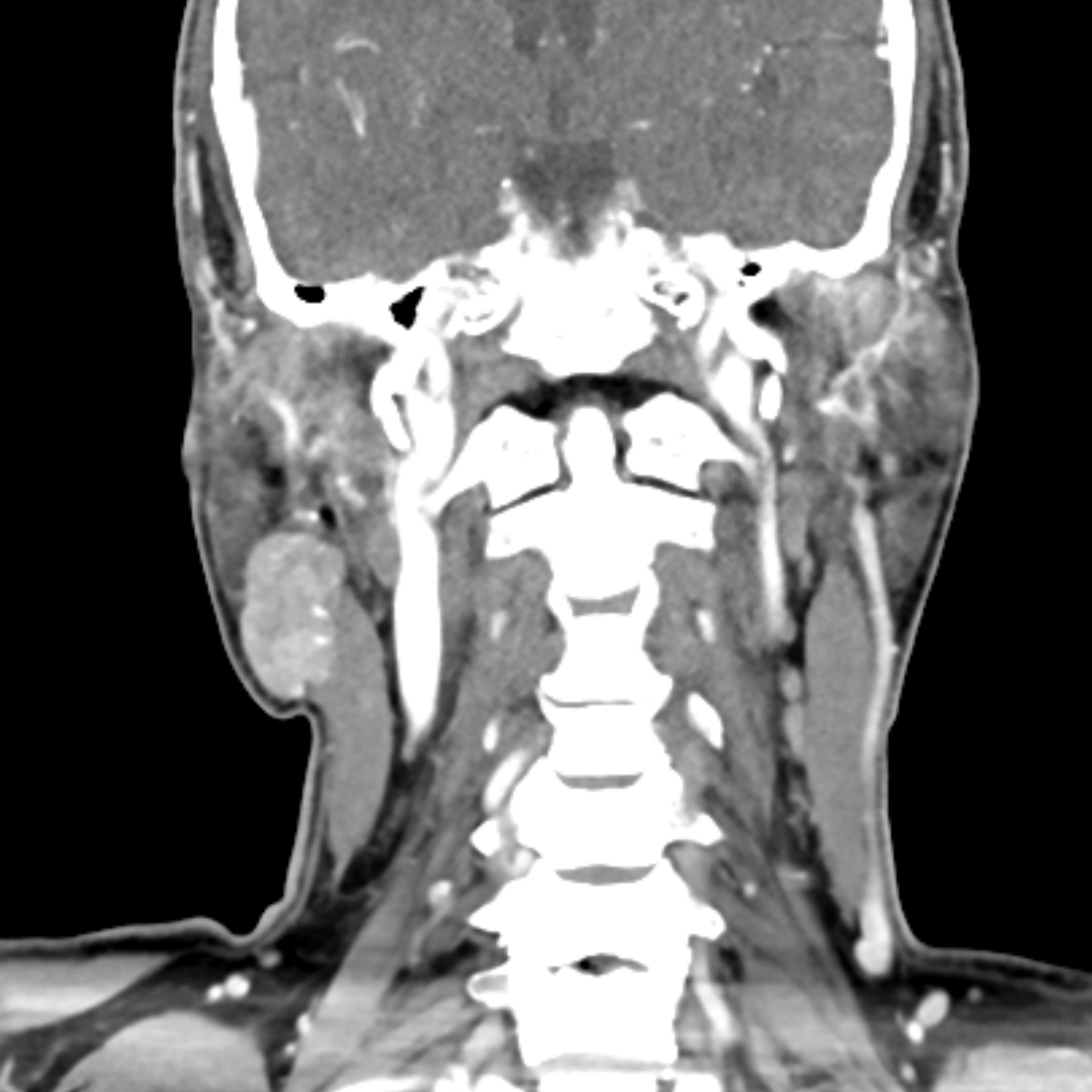
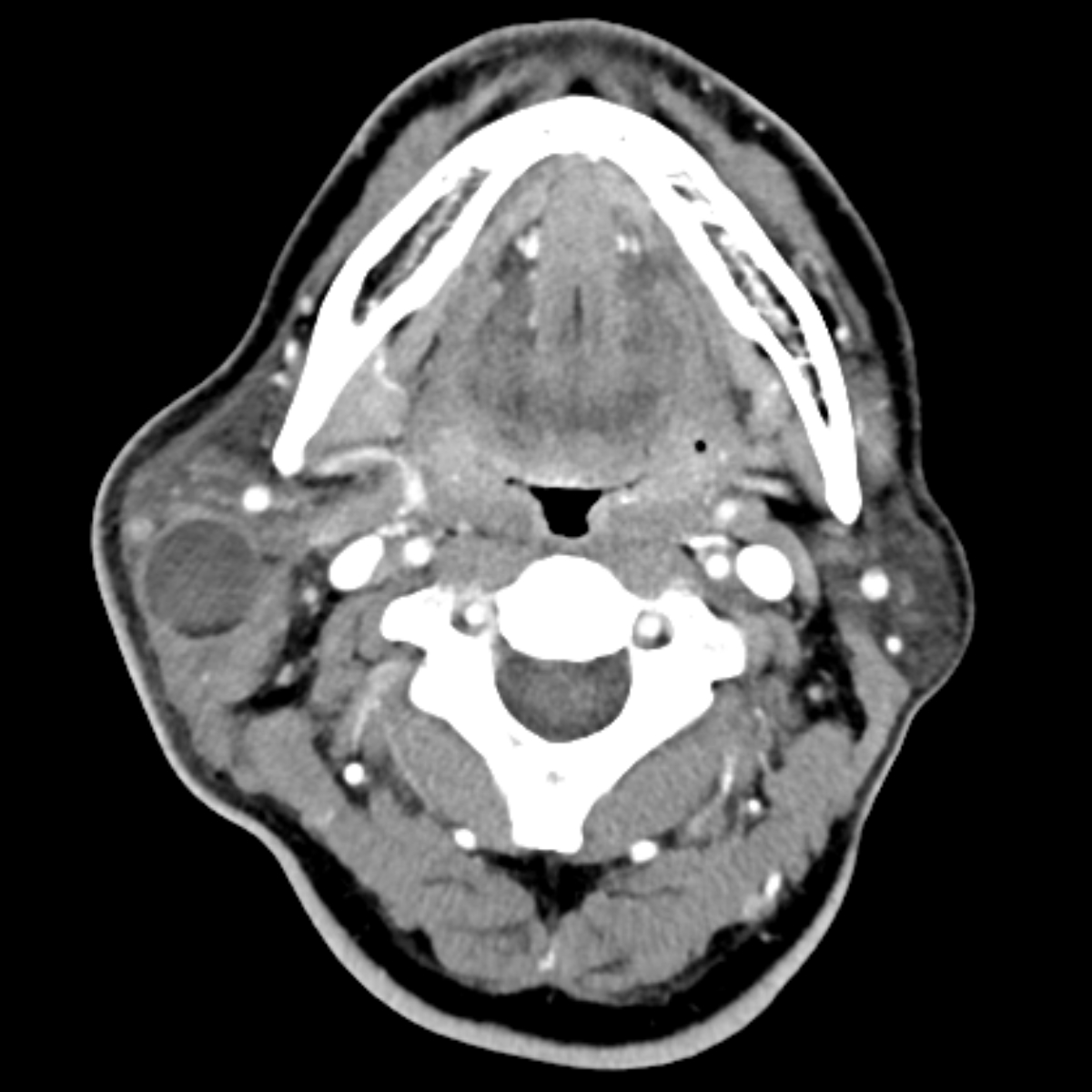
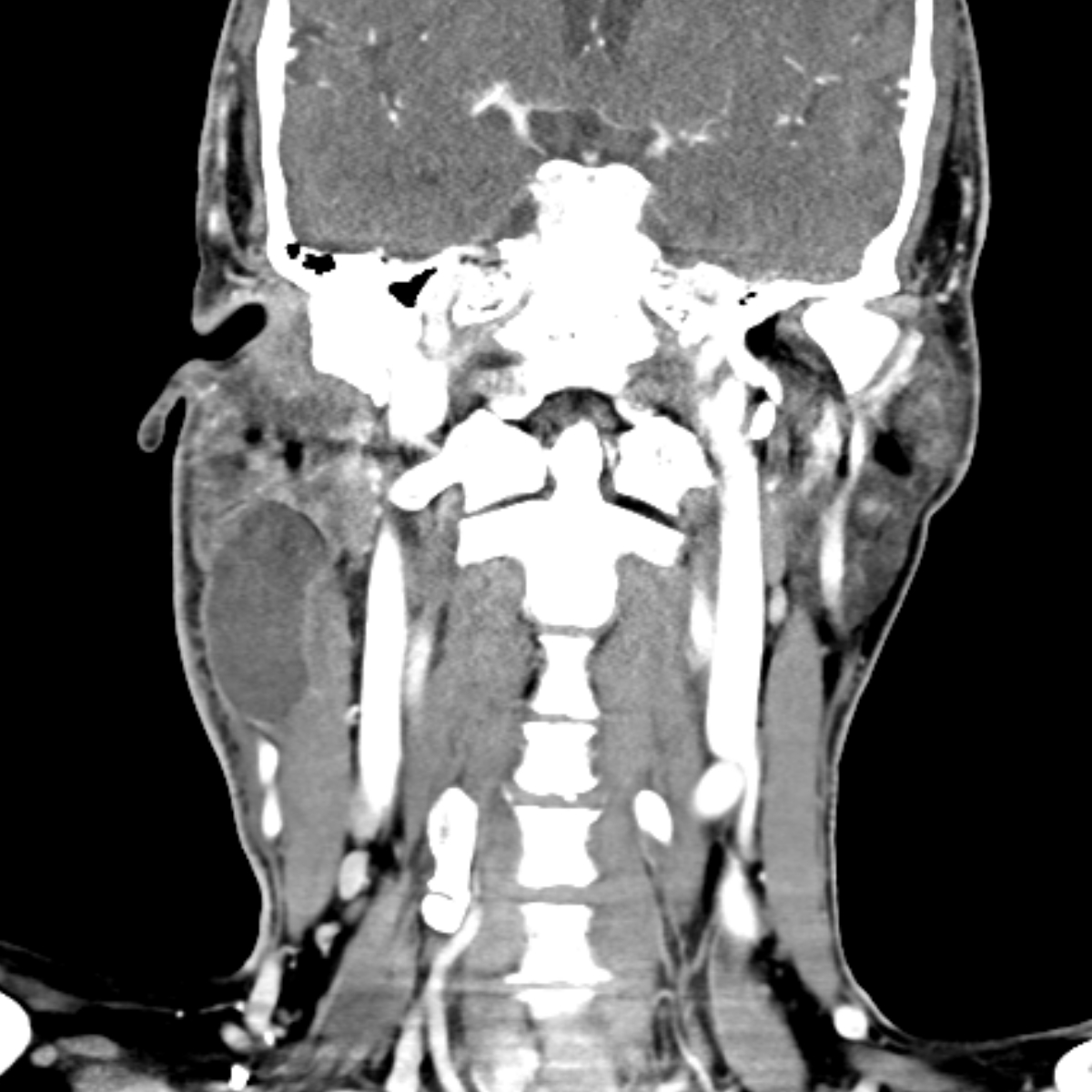
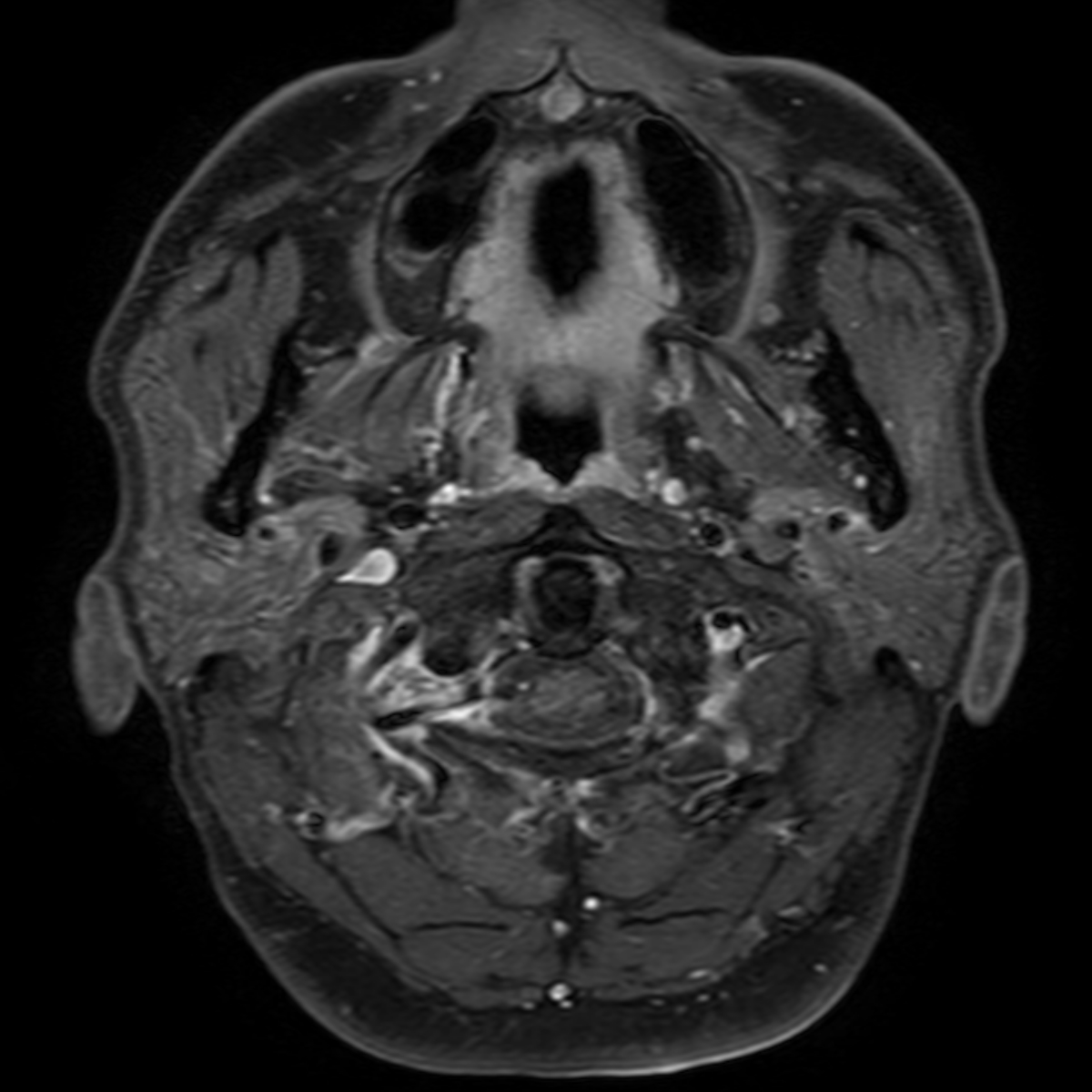
| Clinical information | A 56-year-old man presented with pain and swelling after undergoing FNA for a tumor in the right parotid gland. What is the diagnosis? (Fig 1-2: Immediately after FNA, Fig 3-4: 4 days after FNA, Fig 5: 6 months f/u) |
| Discussion | Warthin’s tumor infarction can occur spontaneously but more commonly follows interventions like FNA, biopsy. Pathophysiology - vascular compromise, vessel injury during FNA, leading to tissue necrosis and secondary inflammatory changes Clinical Presentation - Rapid painful swelling of a previously stable parotid mass, sometimes with erythema, ulceration, or skin necrosis. - Onset usually within days to weeks after FNA. - Sometimes with facial nerve palsy Imaging Findings - Enlarged and heterogeneous mass, sometimes with ill-defined and infiltrative margins. - Extensive central necrosis or fluid areas, rim or heterogeneous enhancement. - Findings can mimic carcinoma, so clinical history and prior stability are critical. Differential Consideration - Ill-defined and infiltrative margin: may mimic high-grade carcinoma - T1 hyperintensity (from hemorrhage/proteinaceous necrosis) + high ADC suggest infarcted benign tumor - FNA sometimes inconclusive or falsely suggests carcinoma due to squamous metaplasia and necrosis from infarction. Reference Kashiwagi N et al. Spontaneously infarcted parotid tumours: MRI findings. Dentomaxillofac Radiol. 2019 Jul;48(5):20180382 |
| Correct answer |
Correct Answer
Semi-Correct Answer |
Submit answer
Answer submission list
The written answers can only be viewed by the administrator and author.