HOME > Weekly Case > Weekly Case
Weekly Case
종결
Case No. 610
2021-12-01~2021-12-31
출제자 : 유인선
Hit : 722
| Period | 2021-12-01~2021-12-31 |
|---|---|
| Diagnosis | Medulloblastoma, desmoplastic/nodular type (histologically defined) |
| Gender |
|
| Age | 19 |
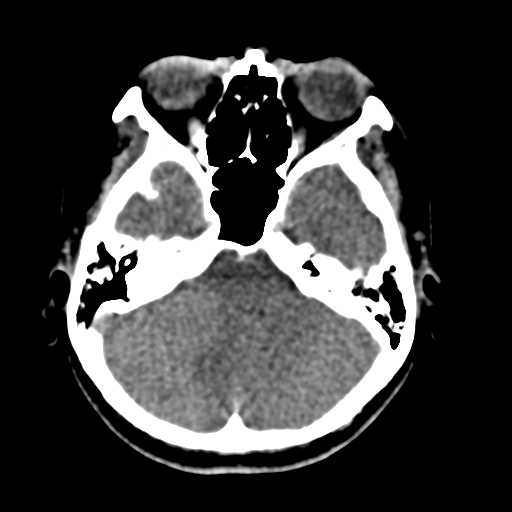
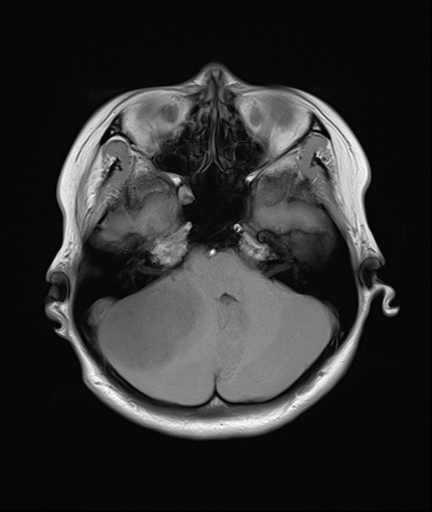
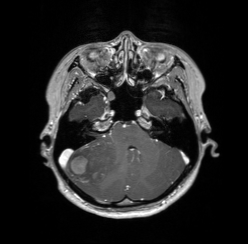
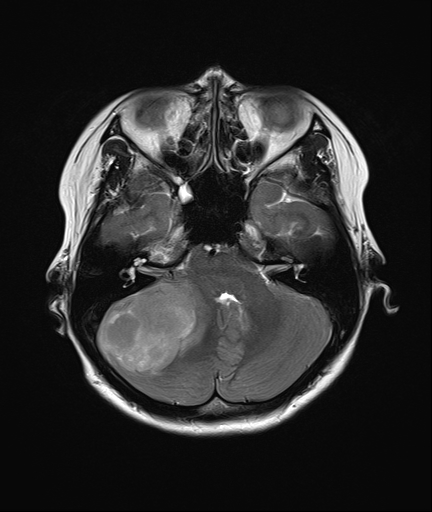
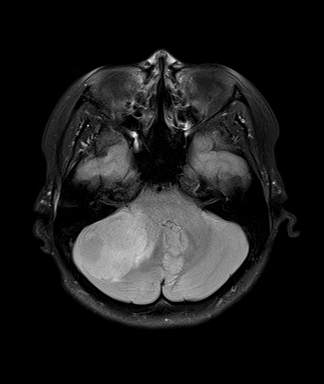
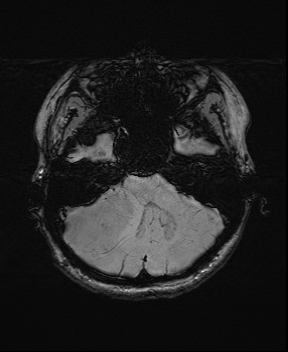
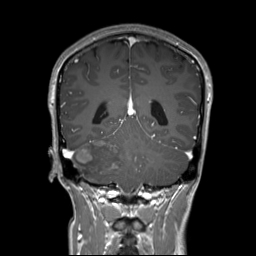
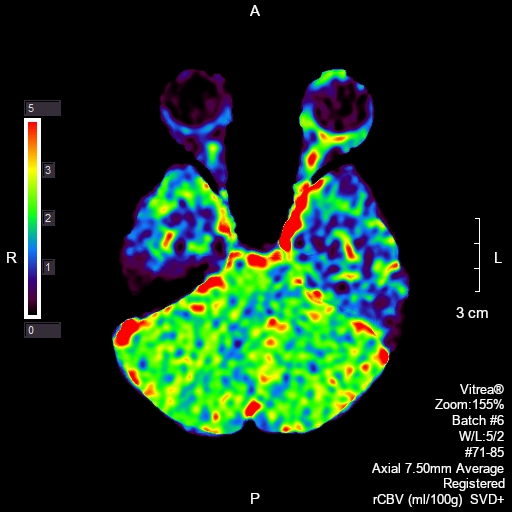
| Clinical information | F/19 headache (onset: 1WA), 일상생활이 안될 정도로 점차 심해짐 진단은? |
| Discussion | Medulloblastoma, desmoplastic/nodular type (histologically defined) 1) Introduction (medulloblastoma) -2nd most common pediatric brain tumor (after astrocytoma) 0-19 age group: -Most before age 10, second peak in 20-40 -Histology • Classic (70%) • Desmoplastic/nodular (15-20%) • Prevalence varies with age (40% of infant, 10% of adult MBs) • Children: vermis, Adult: lateral cerebellar hemispheres • Better prognosis than other MBs (but can recur late) • Nodules in abundant islands of reticulin fiber network • Nodule↑: extensive nodularity (MBEN) • Large cell/anaplastic (10%) 2) Imaging findings - CT: Moderately hyperdense on NECT with heterogeneous enhancement -MR • Hypointense on T1WI, Hyperintense on T2WI • Peritumoral edema (30%), Obstructive hydrocephalus common • 2/3 marked enhancement; 1/3 subtle/marginal/linear enhancement • Cystic degeneration/necrosis (82% of adults) • Restricted diffusion; Low rCBV & increased permeability -Desmoplastic/Nodular MB Off-midline location (adult), vermis (children) Multiple peripheral small cysts Focal areas of T2/FLAIR iso-hypointensity with enhancement Adult MBs have less enhancement than children’s Meningeal extension: leptomeningeal enhancement |
| Correct answer |
Correct Answer
Semi-Correct Answer |