HOME > Weekly Case > Weekly Case
Weekly Case
종결
Case No. 599
2021-08-01~2021-08-31
출제자 : 황인평
Hit : 604
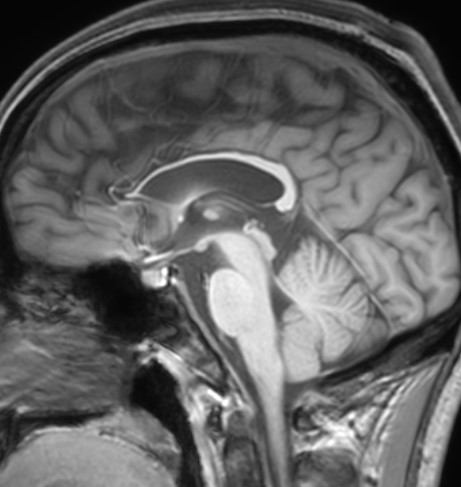
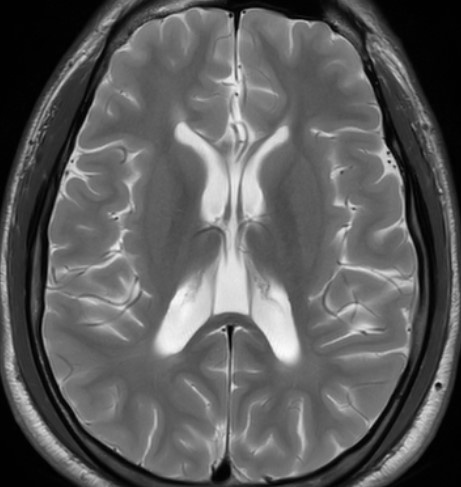
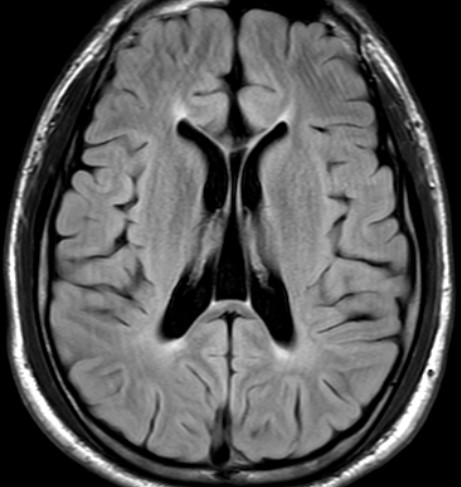
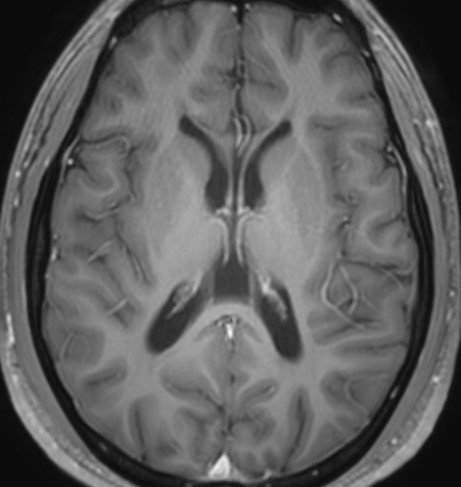
| Period | 2021-08-01~2021-08-31 |
|---|---|
| Diagnosis | Autosomal recessive hereditary spastic paraplegia with a thin corpus callosum |
| Gender |
|
| Age | 20 |
| Clinical information | M/20 C.C.: Gait disturbance 진단은? |
| Discussion | Autosomal recessive hereditary spastic paraplegia with a thin corpus callosum (This patient was diagnosed with spastic paraplegia 11 (SPG11) by gene study.) Clinically presents as a progressive spastic paraplegia, usually beginning during infancy or puberty, and is often associated with cognitive impairment, occasionally antedating the onset of paraparesis. “The ears of the lynx” MR imaging sign suggests the presence of a genetic mutation, likely characteristic of SPG11 or SPG15 This sign corresponds to long T1 and T2 values in the forceps minor of the corpus callosum. Reference: AJNR Am J Neuroradiol. 2019 Jan; 40(1): 199–203. |
| Correct answer |
Correct Answer
Semi-Correct Answer |