HOME > Weekly Case > Weekly Case
Weekly Case
종결
Case No. 541
2020-01-01~2020-01-31
출제자 : 박지은
Hit : 613
| Period | 2020-01-01~2020-01-31 |
|---|---|
| Diagnosis | Multinodular and vacuolating neuronal tumor (MVNT) |
| Gender |
|
| Age | 52 |
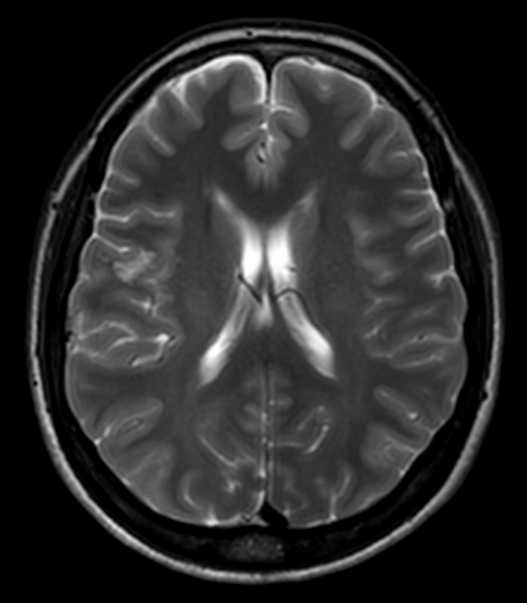
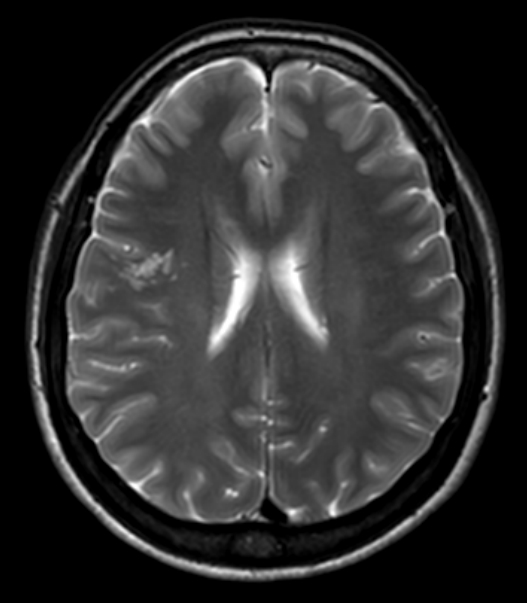
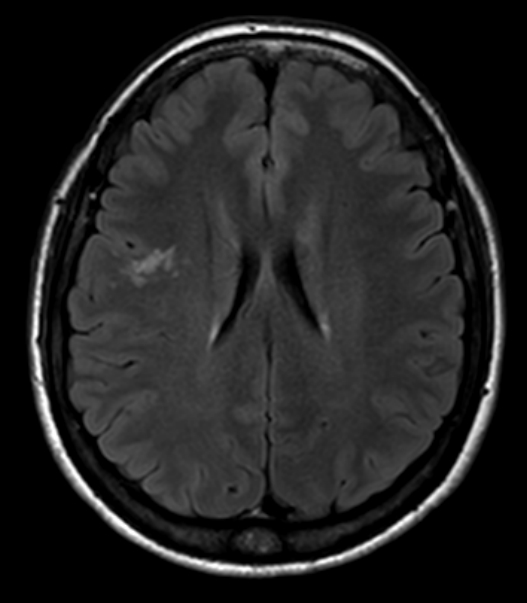
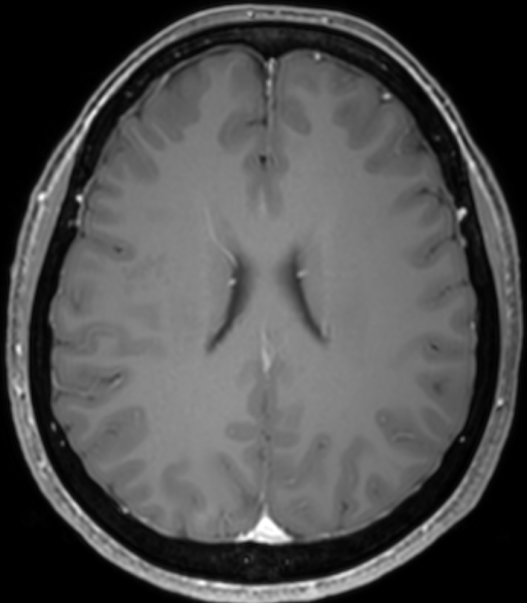
| Clinical information | 건강검진에서 발견된 뇌종양 의심소견으로 내원한 52세 여자 환자이다. 1년전부터 두통이 심해져서 약으로 조절 중이라고 한다. 진단은? |
| Discussion | 1. Multinodular and vacuolating neuronal tumor (MVNT) is a newly recognized cytoarchitectural pattern in the recently revised 2016 edition of the WHO classification of CNS tumors. Radiologically, MVNTs appear as small 'bubbly' indolent subcortical tumors that sometimes present with seizures. These tumors have been most frequently identified in the temporal lobe, although that is likely to be due to that location being more likely to result in seizures than necessarily a predilection for that lobe 2. Radiologic finding CT : Smaller lesions are difficult to identify, but if seen will appear as non-enhancing low attenuation lesions deep to the cortex in the subcortical white matter. MRI : These tumors appear as a cluster of well circumscribed high T2 signal 'bubbles' located predominantly in the subcortical white matter, but can involve overlying cortex. T1: hypointense to adjacent grey and white matter T1 C+: usually no enhancement, some faint focal enhancement may be seen T2: hyperintense to grey and white matter, almost as high as CSF FLAIR: do not suppress 3. Treatment : if asymptomatic, be followed by imaging alone. In symptomatic patients (epileptic) surgical resection often controls seizures. |
| Correct answer |
Correct Answer
Semi-Correct Answer |