HOME > Weekly Case > Weekly Case
Weekly Case
종결
Case No. 485
2018-07-01~2018-07-31
출제자 : 최윤성
Hit : 264
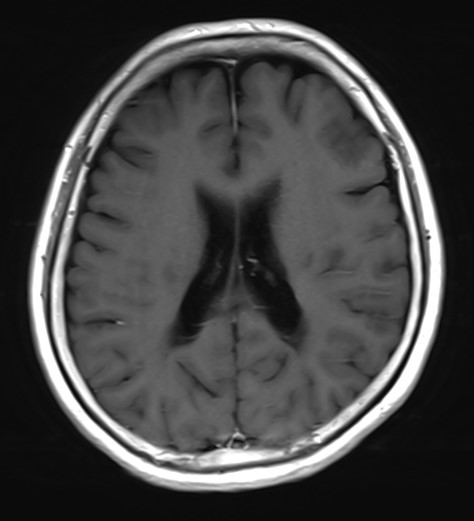
| Period | 2018-07-01~2018-07-31 |
|---|---|
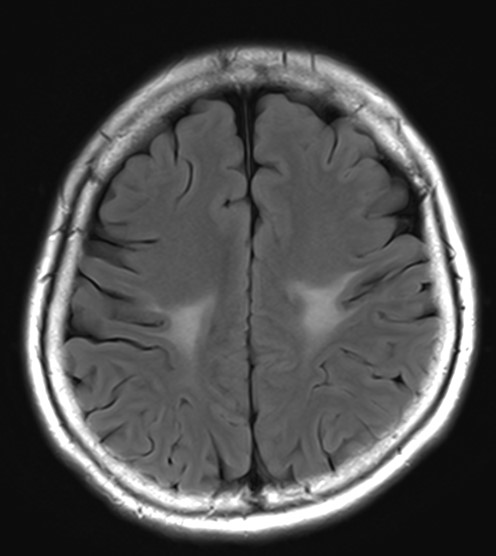
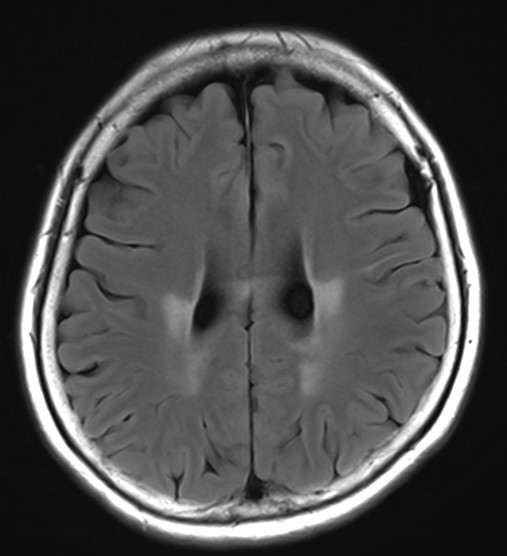
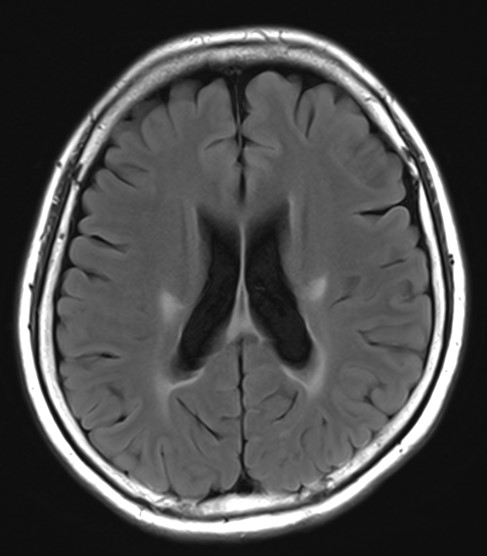
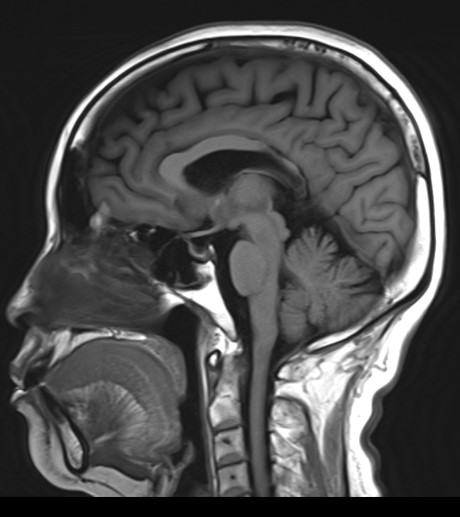
| Diagnosis | Adult Krabbe disease |
| Clinical information | • F/54 • 10년 이상 지속된 보행장애 • 신발 앞축을 땅에 끌고 걷고 잘 걸려서 넘어진다. • 보행시 양측 무릎이 서로 비벼진다. • 환자의 동생 – 어려서 목을 가누지 못하고 생후 1년 정도에 사망 |
| Discussion | • Diagnosis : Adult Krabbe disease – Deficiency of the lysosomal enzyme galactocerebrosidase (galactosylceramidase, GALC) – Infantile form Krabbe disease • Most common form of Krabbe disease • Begins in the first 6 months of life and progresses rapidly, dies before age 2 • Frequent involvement of deep gray matter and cerebellar white matter, and nearly constant involvement of the pyramidal tract – Late-onset form of Krabbe disease • Clinically more heterogenous, progress more slowly • Hemiparesis, spastic paraparesis, intellectual impairment, cerebellar ataxia, visual failure, peripheral polyneuropathy – Late-onset form of Krabbe disease • MRI features • Constant corticospinal tract abnormalities • High T2-SI in the white matter, mostly in the posterior regions, with frequent involvement of splenium of the corpus callosum • Debs et al. J Inherit Metab Dis (2013) 36:859–868 • T2-hyperintensities along the pyramidal tracts in 15/16 patients (94 %) • Abnormalities of the whole tracts starting from prerolandic • regions, corona radiata, internal capsules, cerebral peduncles, ventral portions of the pons and medulla were characteristic • Sometimes abnormalities were incomplete or even asymmetric • Hyper-intensities along the optic radiations observed in 8/9 patients (89 %) • Hyper-intensities or atrophy of the splenium of the corpus callosum in 9/15 patients (60 %) – In adult patients with slowly progressive spastic paraparesis, the differential diagnosis should include late-onset Krabbe disease, especially when brain MR images reveal distinctly increased signal intensity along the corticospinal tracts |
| Correct answer |
Correct Answer
Semi-Correct Answer |