HOME > Weekly Case > Weekly Case
Weekly Case
종결
Case No. 466
2017-12-01~2017-12-31
출제자 : 박미나
Hit : 275
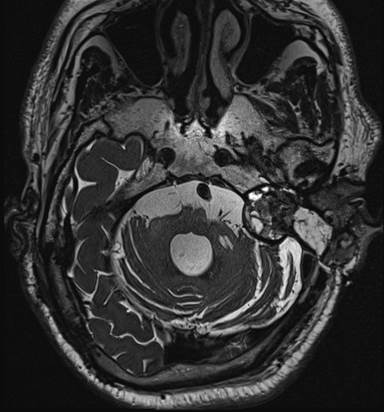
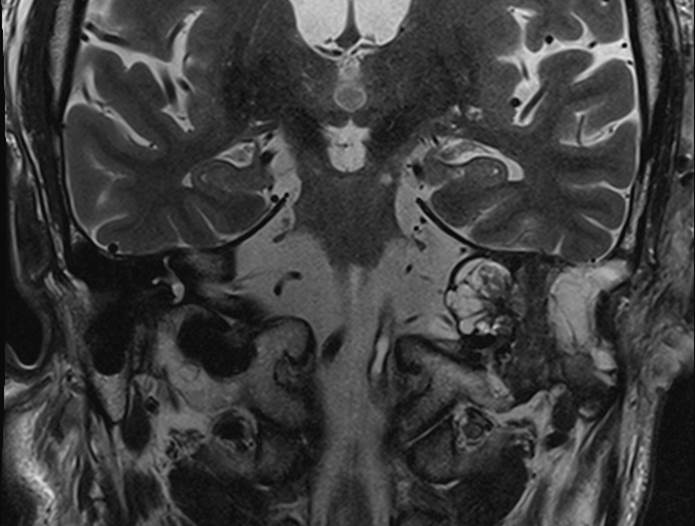
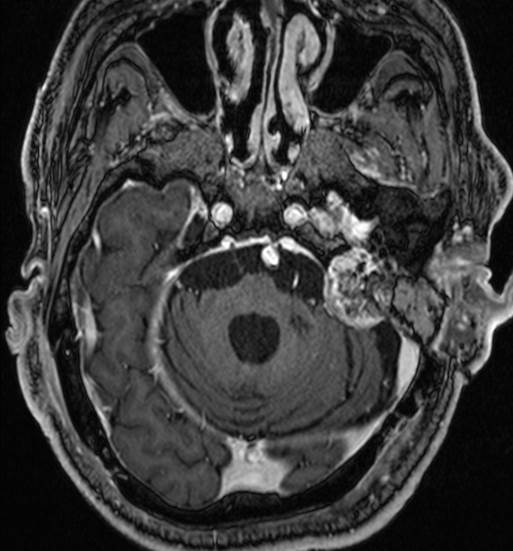
| Period | 2017-12-01~2017-12-31 |
|---|---|
| Diagnosis | Endolymphatic sac tumor |
| Clinical information | 64/M left side hearing loss |
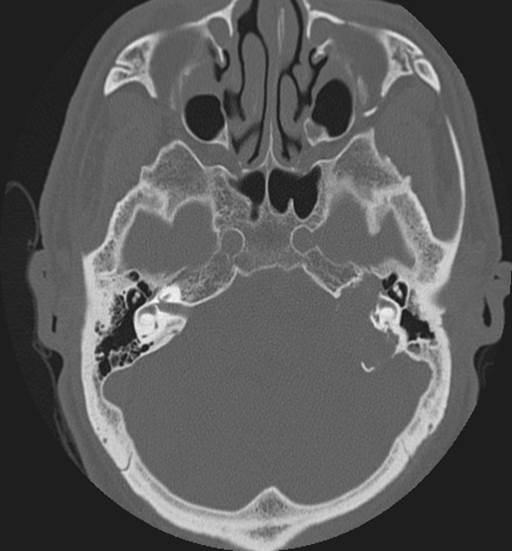
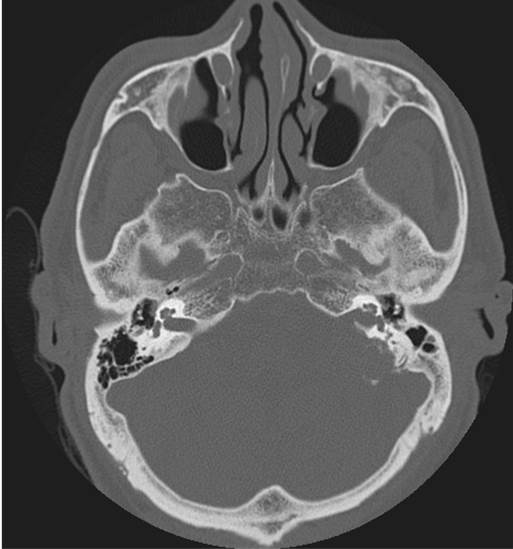
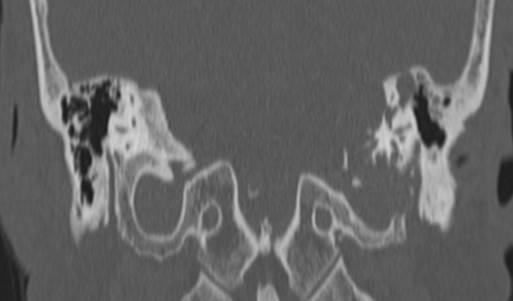
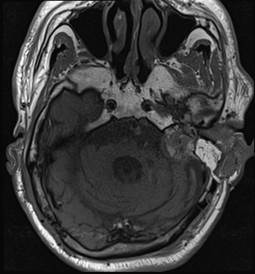
| Discussion | Endolymphatic sac tumor Background: Endolymphatic sac tumor (ELST) is a rare primary temporal bone neoplasm which can be encountered sporadically or in Von Hippel-Lindau disease. Typically ELST is encountered in young individuals. It has benign histopathological appearance with clinically destructive behavior which occurs in the skull base and frequently invades the posterior petrous bone, the mastoid, semicircular canal, cerebellopontine angle structures and cranial nerve Clinical Presentation: Patients characteristically present with unilateral sensorineural hearing loss, tinnitus, otalgia, otorrhea, vertigo, ataxia, and facial nerve paresis. An indolent clinical course and long-standing symptom history are typical. Key Diagnostic Feature: The imaging hallmark of ELST is the presence of a retrolabyrinthine mass associated with osseous erosion. CT: an expansile lytic lesion of the mastoid process of the petrous bone which extended to involve both the posterior fossa as well as the middle ear Central calcific spiculation and posterior rim calcification MR: ELST appeared isointense with brain on both the T1- and T2-weighted images with slight enhancement. ELST may show focal T1 hyperintense signals and heterogeneous T2 signals. Differential Diagnoses: Meningioma, schwannoma, paraganglioma, cholesterol granuloma, bone metastasis |
| Correct answer |
Correct Answer
Semi-Correct Answer |