HOME > Weekly Case > Weekly Case
Weekly Case
종결
Case No. 457
2017-09-01~2017-09-30
출제자 : 안성준
Hit : 326
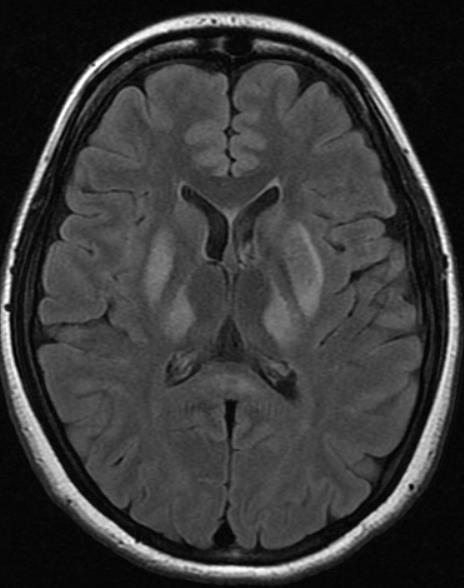
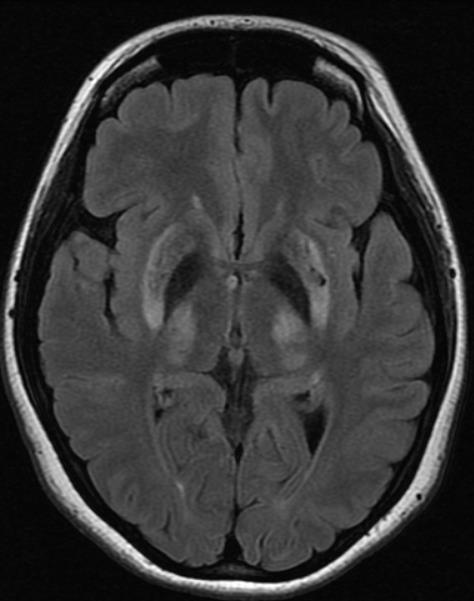
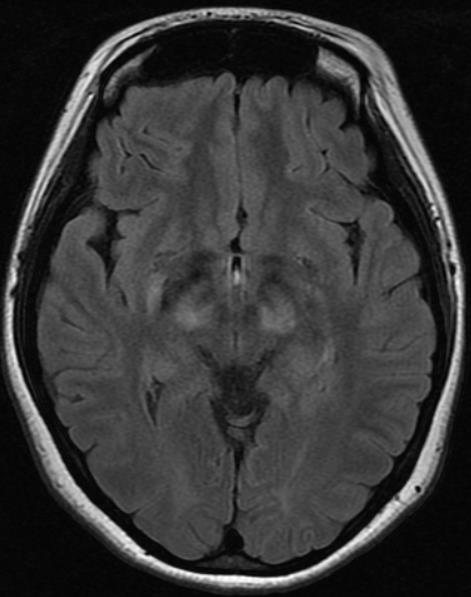
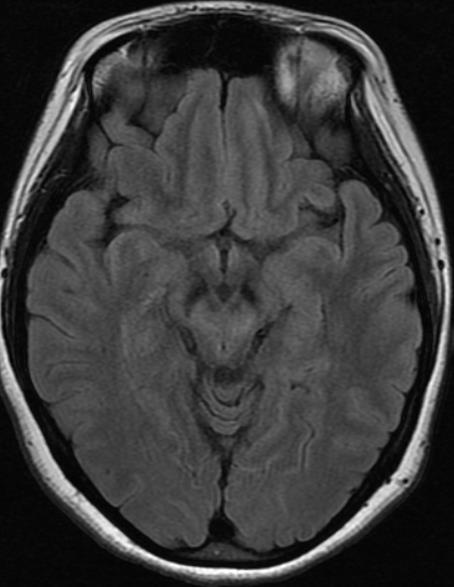
| Period | 2017-09-01~2017-09-30 |
|---|---|
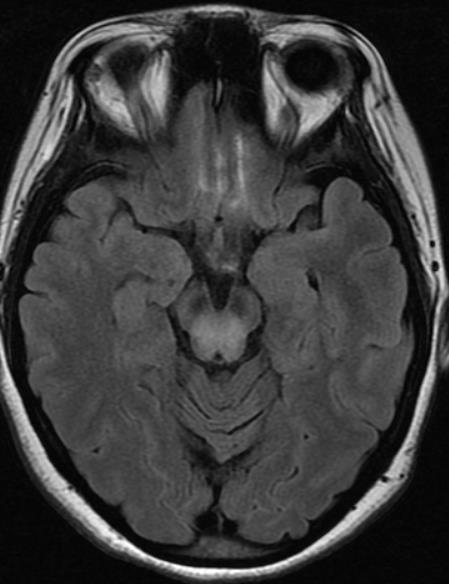
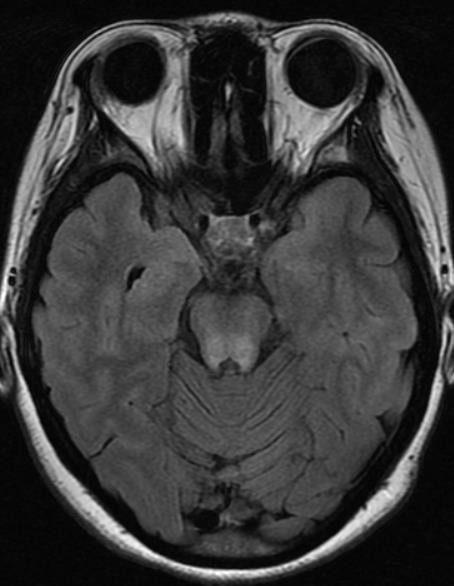
| Diagnosis | Wilson disease |
| Clinical information | 26/F C.C: Rt. foot hypothesia, involuntary movement |
| Discussion | -Hepatolenticular degeneration -Autosomal recessive disorder of inborn defect in copper metabolism Mutation in the ATP7B gene → deficiency of serum transport protein of copper, ceruloplasmin → failure of copper excretion into the bile -Abnormal accumulation of copper, particularly in the liver, brain and cornea -Bilateral symmetric T2 high intensities putamen (a common finding), globus pallidus, caudate nuclei thalamus (typically confined to the ventrolateral aspect) pons (dorsal and central), brain stem -T1WI: generally low SI in BG, but occasionally high SI (paramagnetic effects of coppers) Characteristic “face of giant panda” sign at midbrain level Some of the lesions can show reversible changes following copper chelating treatment -Significant correlation between clinical course and follow-up MRI |
| Correct answer |
Correct Answer
Semi-Correct Answer |