HOME > Weekly Case > Weekly Case
Weekly Case
종결
Case No. 442
2017-04-01~2017-04-30
출제자 : 배윤정
Hit : 377
| Period | 2017-04-01~2017-04-30 |
|---|---|
| Diagnosis | SMART (Stroke-like Migraine Attacks after Radiation Therapy) syndrome |
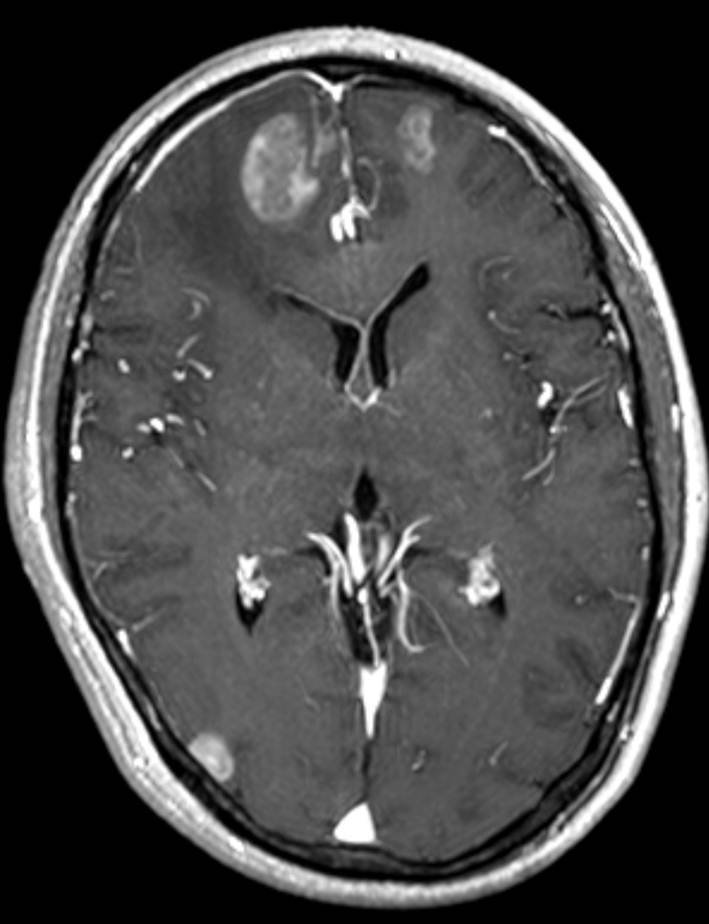
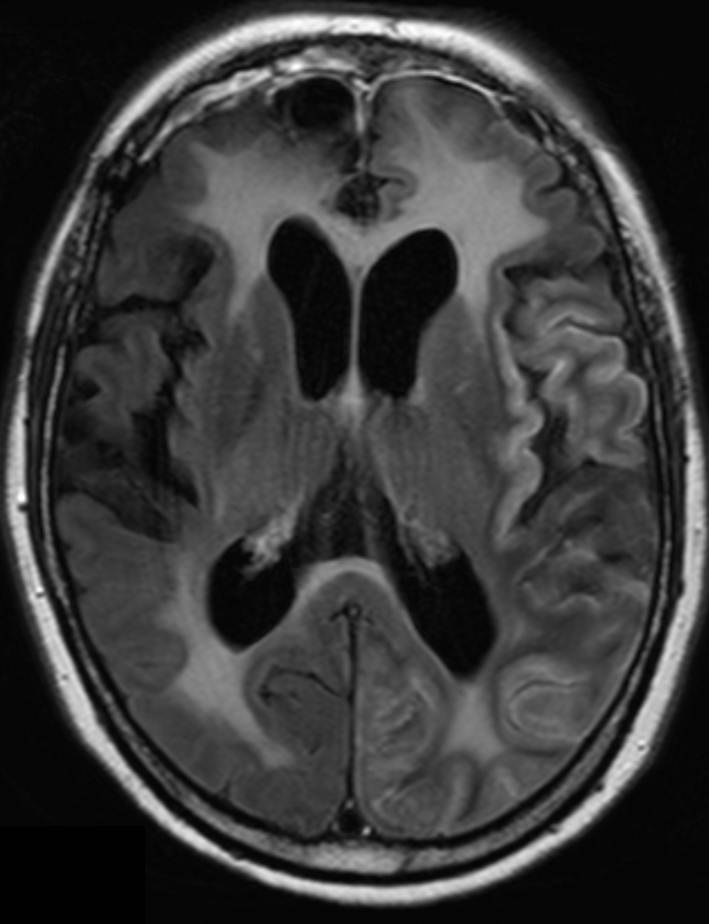
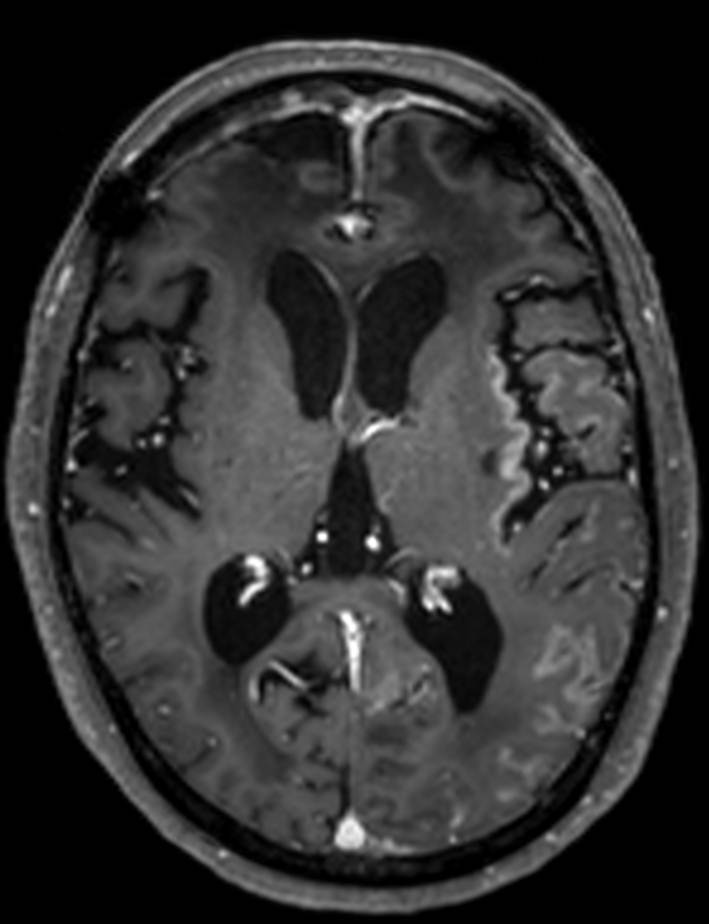
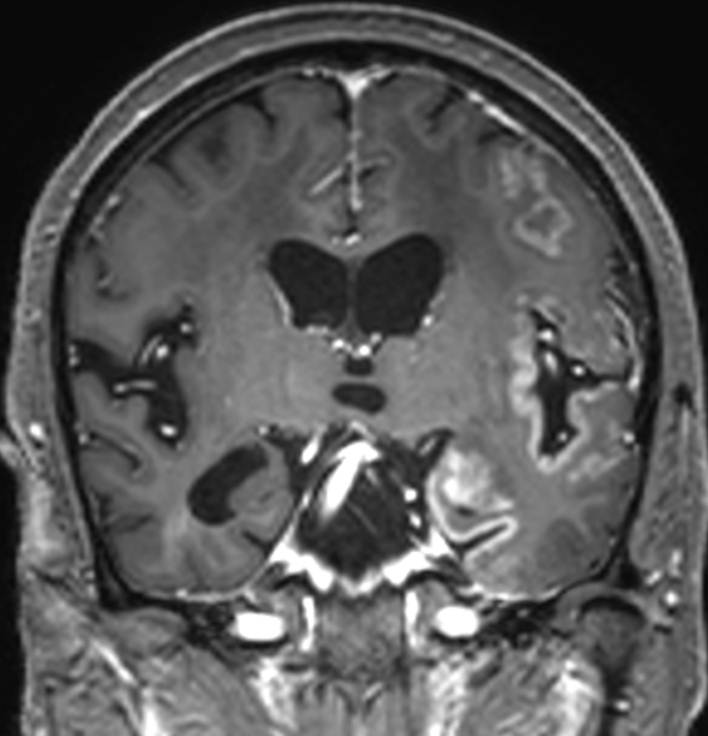
| Clinical information | F/64 Treatment history for brain tumor Current problem: Headache, seizure-like movement What is your diagnosis on post-treatment brain MRI? 1st figure(2005-07-05), 2~4th figure (2012-10-24) |
| Discussion | SMART (Stroke-like Migraine Attacks after Radiation Therapy) syndrome Patient’s history: Underwent whole brain radiation therapy (WBRT) for brain metastases from lung cancer Pre-treatment MRI (2005-07-05): Multiple enhancing metastases in both frontal and right occipital lobes. Post-treatment MRI (2012-10-24): Diffuse gyral swelling (hyperintense on FLAIR) with enhancements in left cerebral hemisphere Combined patchy periventricular T2 hyperintensities, suggesting radiation-induced leukencephalopathy SMART syndrome -Uncommon delayed complication of cerebral radiation therapy -Clinical manifestations a. Headache and stroke-like symptoms (weakness, aphasia, sensory or visual loss), entirely reversible within hours to weeks, following radiation therapy for cranial tumors b. Years after high-dose radiation therapy, 1 to 35 years c. Occasionally patients may have migraine-like aura and seizures. d. Causes: metabolic abnormalities, neuronal damage, vascular instability, hypoxia/ischemia, etc. -MR findings a. Prominent and transient gyral enhancement with cortical swelling/thickening showing T2 hyperintensity. b. May present diffusion-restriction, laminar necrosis, and multiple microhemorrhagic foci c. Self-limiting, gradually resolves over the course of several weeks -Differential diagnosis Status epilepticus, subacute infarction, prolonged complicated migraine |
| Correct answer |
Correct Answer
Semi-Correct Answer |