HOME > Weekly Case > Weekly Case
Weekly Case
종결
Case No. 424
2016-10-01~2016-10-31
출제자 : 차지훈
Hit : 439
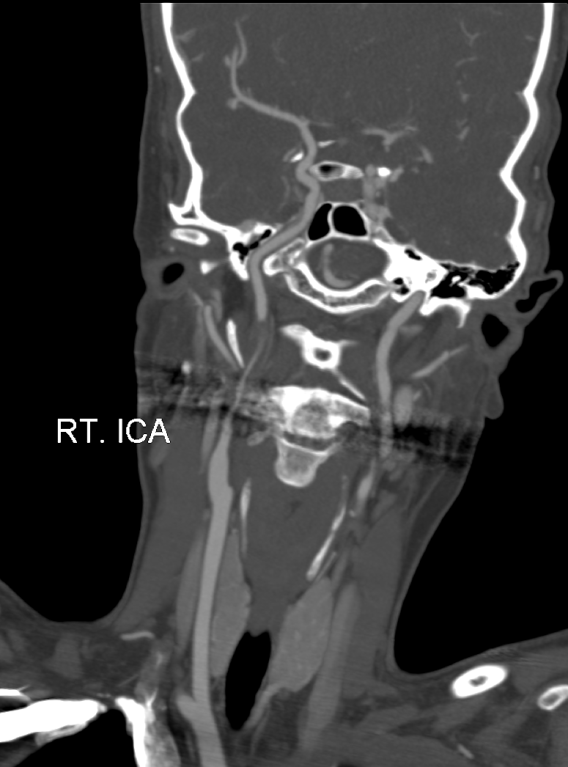
| Period | 2016-10-01~2016-10-31 |
|---|---|
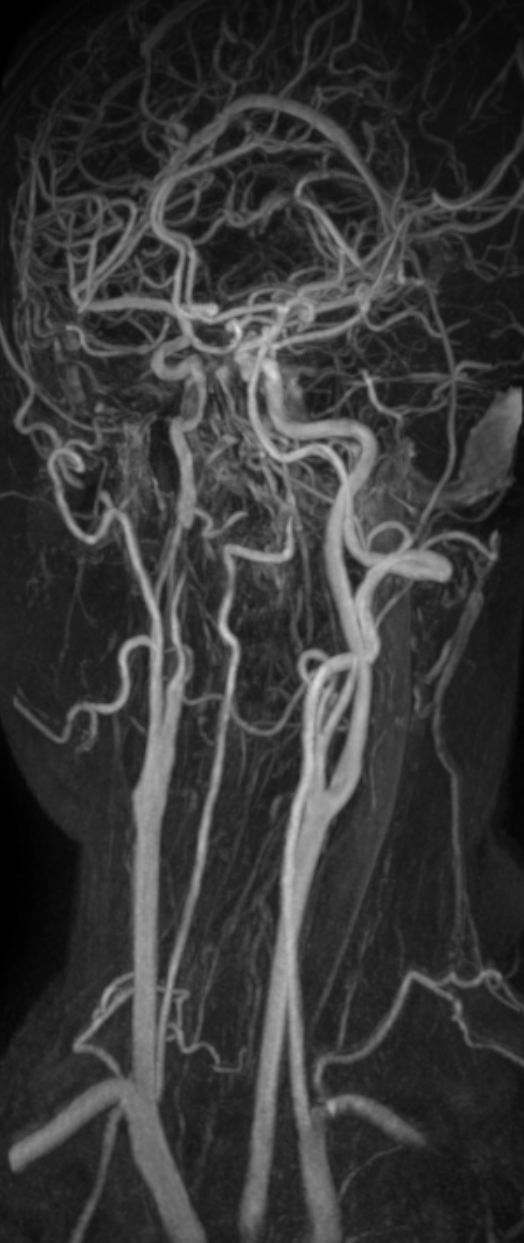
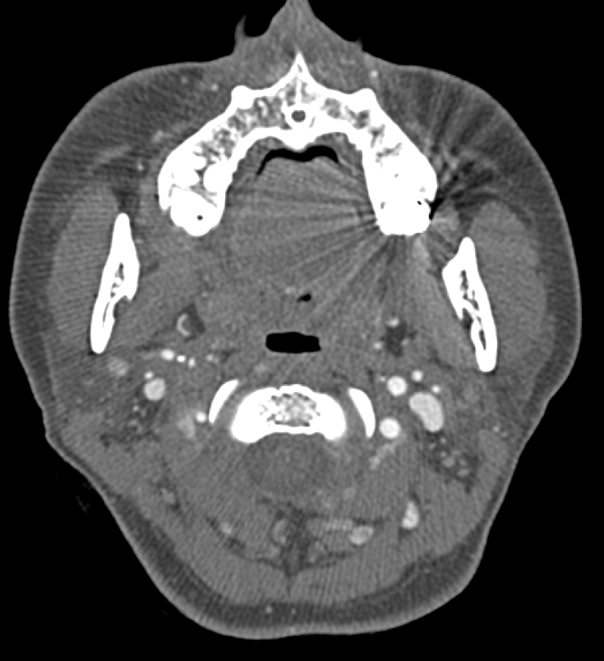
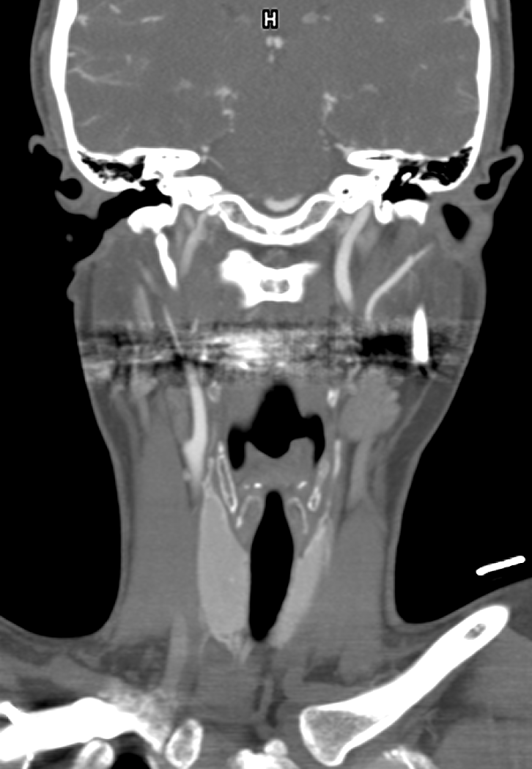
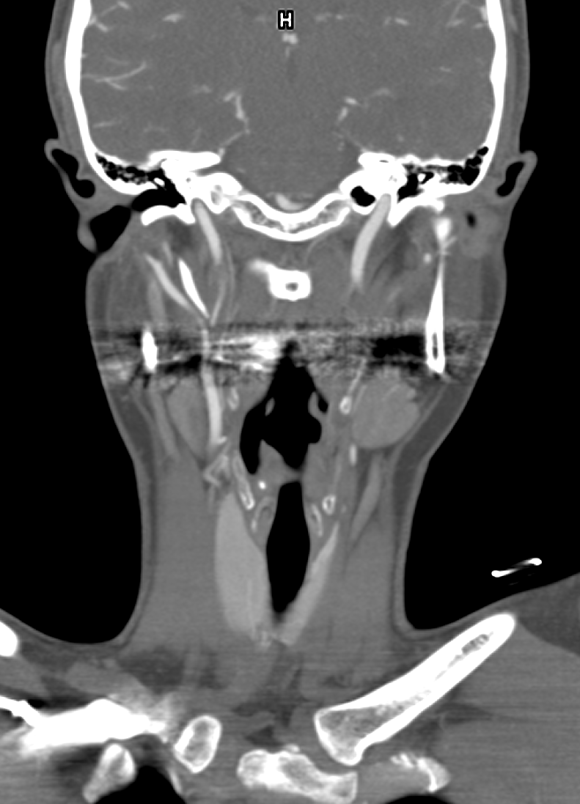
| Diagnosis | eagle syndrome with carotid dissection |
| Clinical information | F/38 C.C> headache |
| Discussion | Imaging findings - Cervical internal carotid artery dissection with stenosis - Close proximity of elongated styloid process to dissected internal carotid artery Review - Named after otolaryngologist Watt W. Eagle (1937) - Clinical syndrome caused by the abnormal elongation of the styloid process with calcification/ossification of the stylohyoid ligament - The actual cause of the elongation is a poorly understood process. Several theories have been proposed: 1) Congenital elongation of the styloid process due to persistence of a cartilaginous analog of the stylohyal (one of the embryologic precursors of the styloid) 2) Calcification of the stylohyoid ligament by an unknown process 3) Growth of osseous tissue at the insertion of the stylohyoid ligament - Styloid process - carotid artery/cranial nerve compression result in various symptomatic presentation Classic eagle syndrome – unilateral sore throat, dysphagia, foreign body sensation, tinnitus, facial and neck pain, otalgia Vascular or stylocarotid form – compression or dissection of carotid artery, TIA, ischemic stroke - Imaging features Elongated styloid process >3cm (normal length of styloid process – 2.5cm) Incidence – 4~28% (symptom 4~10%) Bilateral > unilateral, symptom appear on only one side |
| Correct answer |
Correct Answer
Semi-Correct Answer |