HOME > Weekly Case > Weekly Case
Weekly Case
종결
Case No. 401
2016-03-01~2016-03-31
출제자 : 이경미
Hit : 486
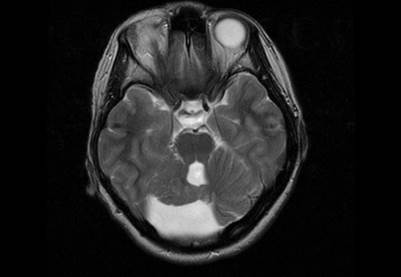
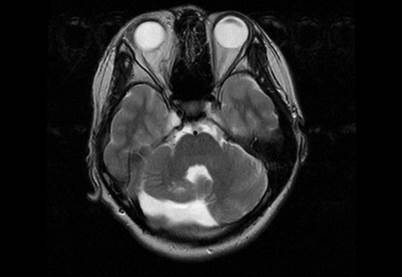
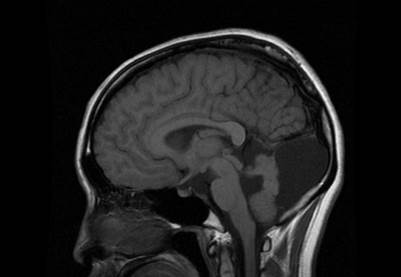
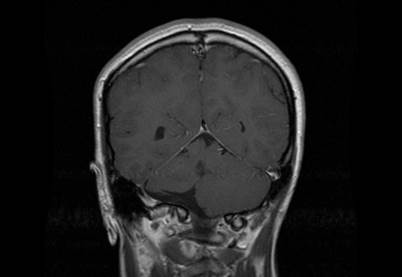
| Period | 2016-03-01~2016-03-31 |
|---|---|
| Diagnosis | Hydranencephaly |
| Clinical information | 5day/Female 분만 직전 시행한 초음파에서 이상소견 관찰되어 further evaluation위해 MRI촬영함. |
| Discussion | “ Hydranencephaly “ water without the brain. -1-2 per 10,000 live births, poor prognosis (85% die by the end of the first year). Both internal carotid artery circulation, diffuse liquefactive necrosis of the cerebral mantle, maternal trauma, toxins, twin-twin transfusion syndrome, massive hemorrhage, and infection. Most of the cerebral hemispheres, destroyed. Translucent thin-walled sacs of CSF, most of supratentorial space. The medial temporal lobes, brainstem, cerebellum, and parts of the thalami (all supplied by the posterior circulation) : relatively preserved. CSF : fills the supratentorial space The falx cerebri : generally intact, appears to "float" in the water-filled cranial vault The basal ganglia : present and separated, but may appear atrophic Small remnants of medial frontal and parietooccipital lobes can be present A largely absent cerebral mantle. The falx : easily identified The fluid-filled spaces follow CSF : some signal heterogeneity is often present secondary to CSF pulsations -Severe obstructive hydrocephalus. e.g., secondary to aqueductal stenosis. A thin cortex can be seen compressed against the dura and inner table of the calvaria. -Alobar holoprosencephaly No midline fissure divides the brain into two separate cerebral hemispheres The falx and interhemispheric fissure : absent The basal ganglia : fused -Schizencephaly. large transmantle CSF clefts lined with dysplastic-appearing cortex |
| Correct answer |
Correct Answer
Semi-Correct Answer |