HOME > Weekly Case > Weekly Case
Weekly Case
종결
Case No. 319
2013-10-01~2013-10-31
출제자 : 김대윤
Hit : 403
| Period | 2013-10-01~2013-10-31 |
|---|---|
| Diagnosis | Vogt-Koyanagi-Harada syndrome |
| Clinical information | 75/M C.C: 한달 전부터 갑자기 발생한 Both visual disturbance 와 Both hearing disturbance 안구의 외상, 수술이나 이전 병력 없음. |
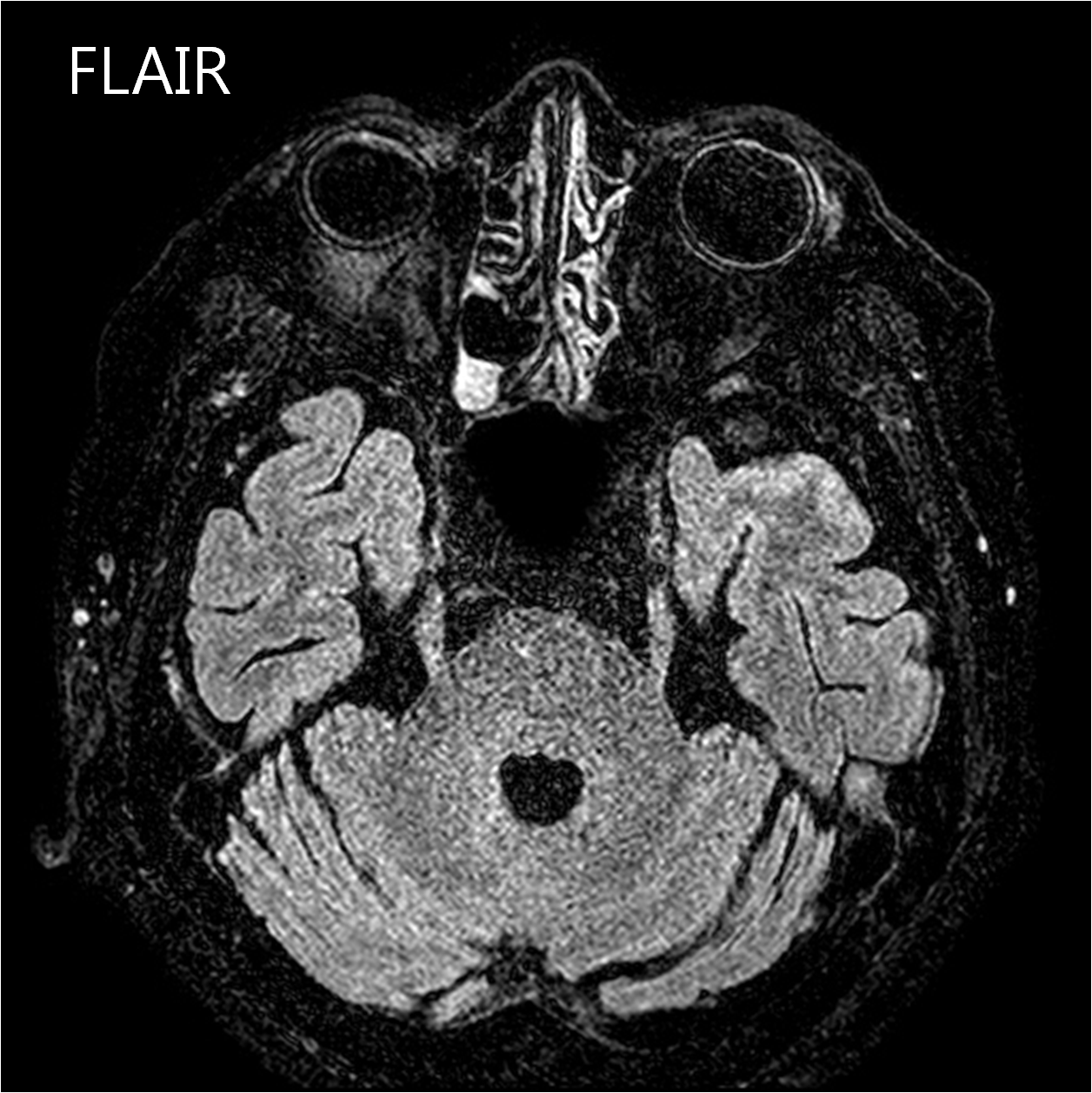
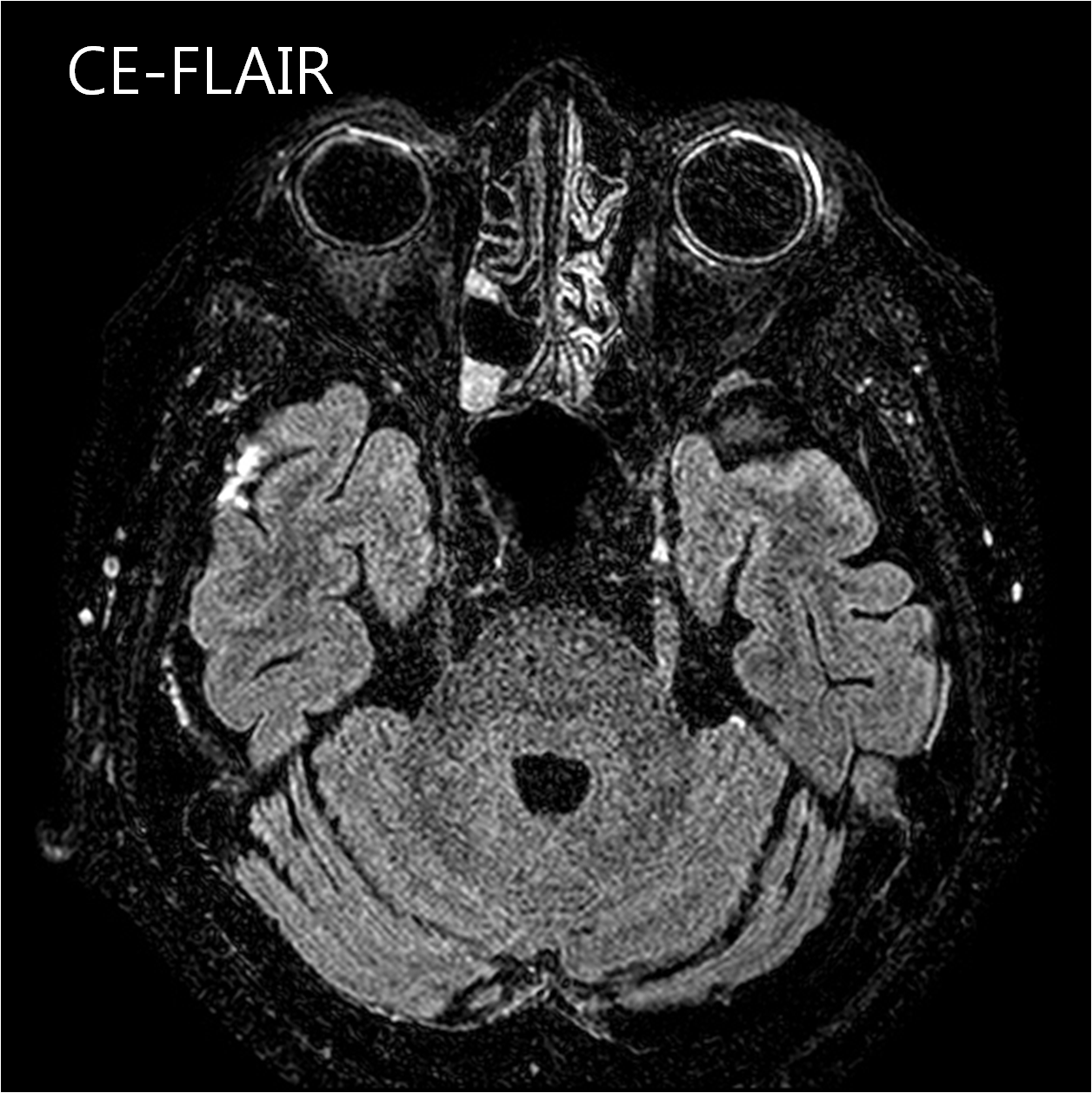
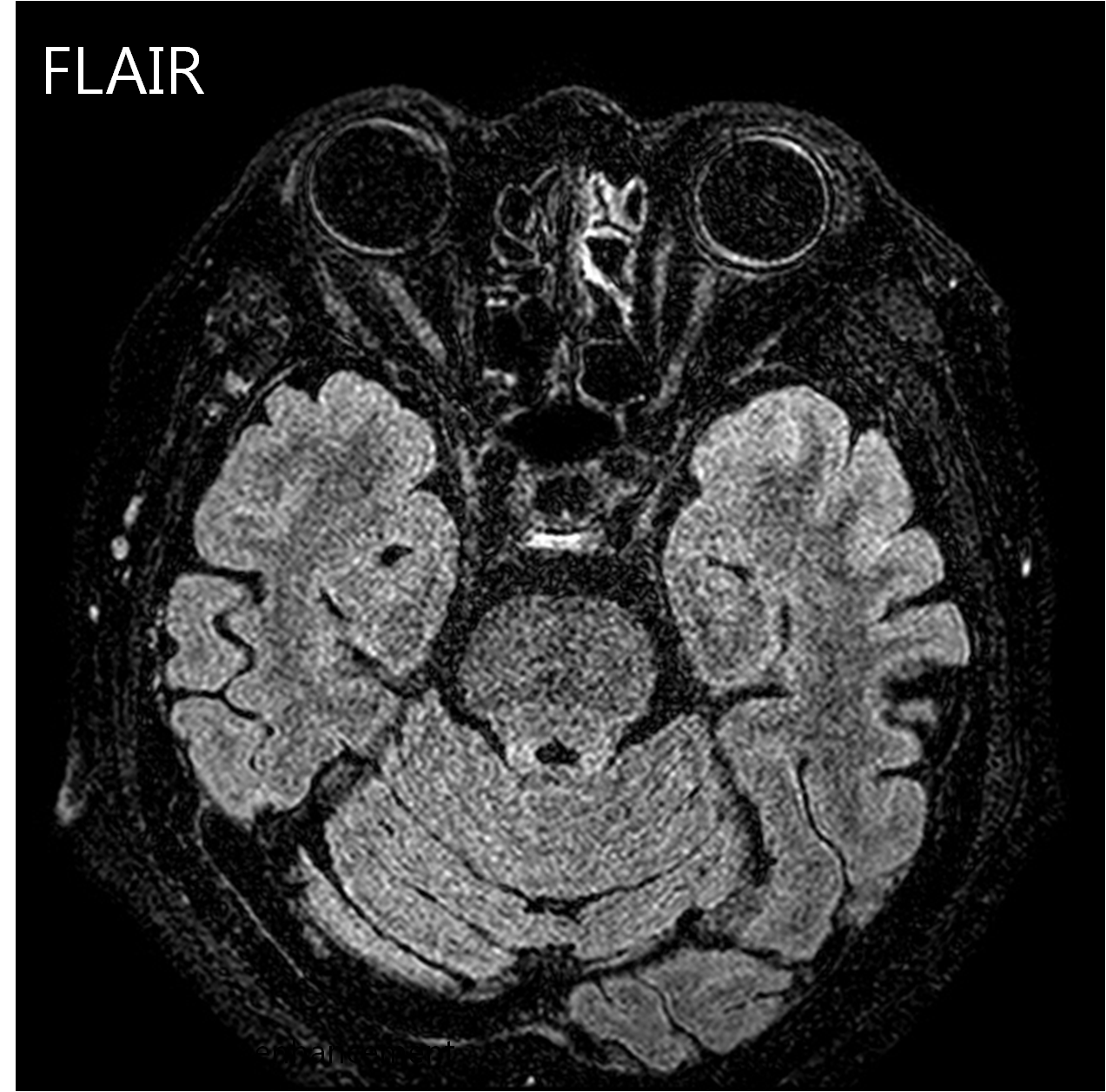
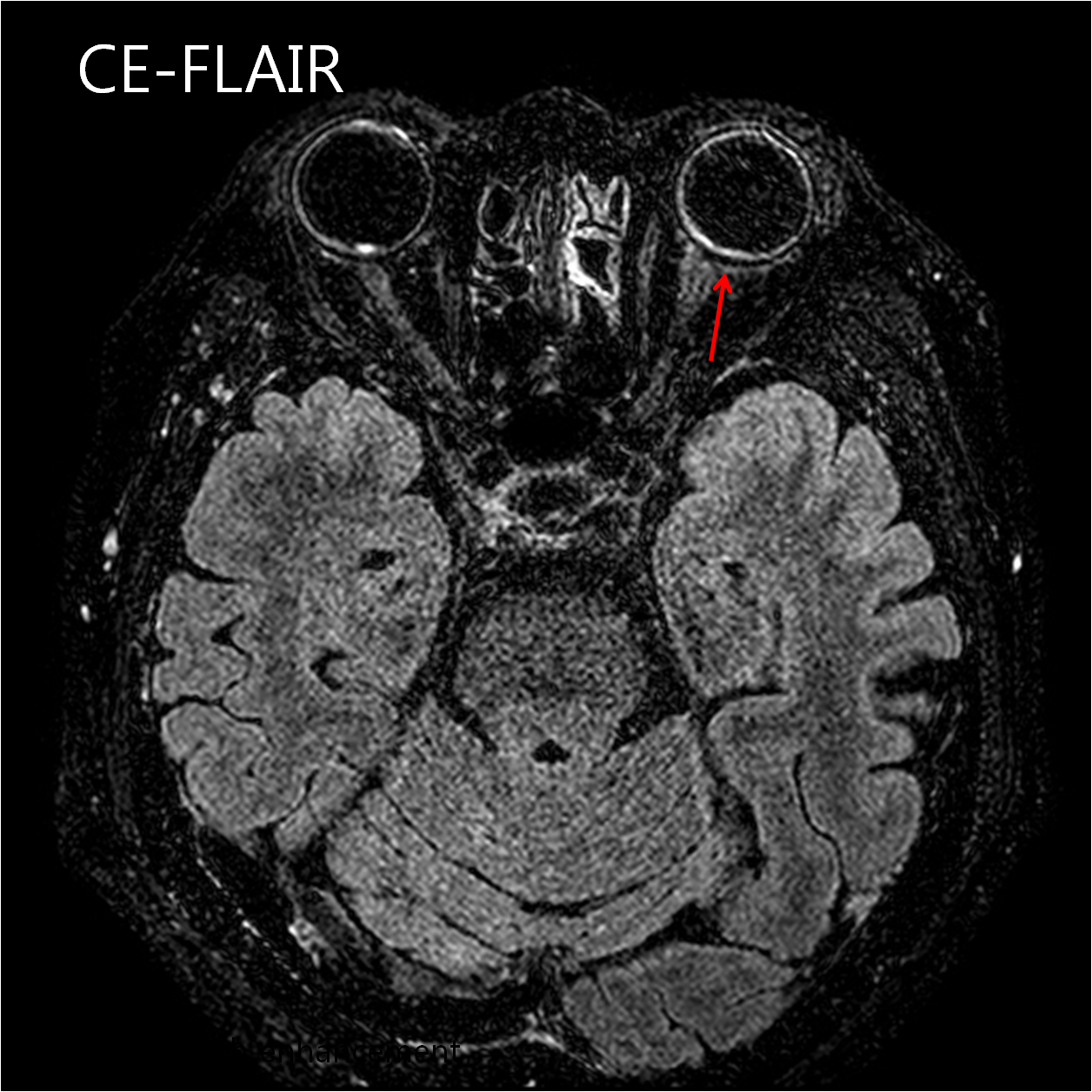
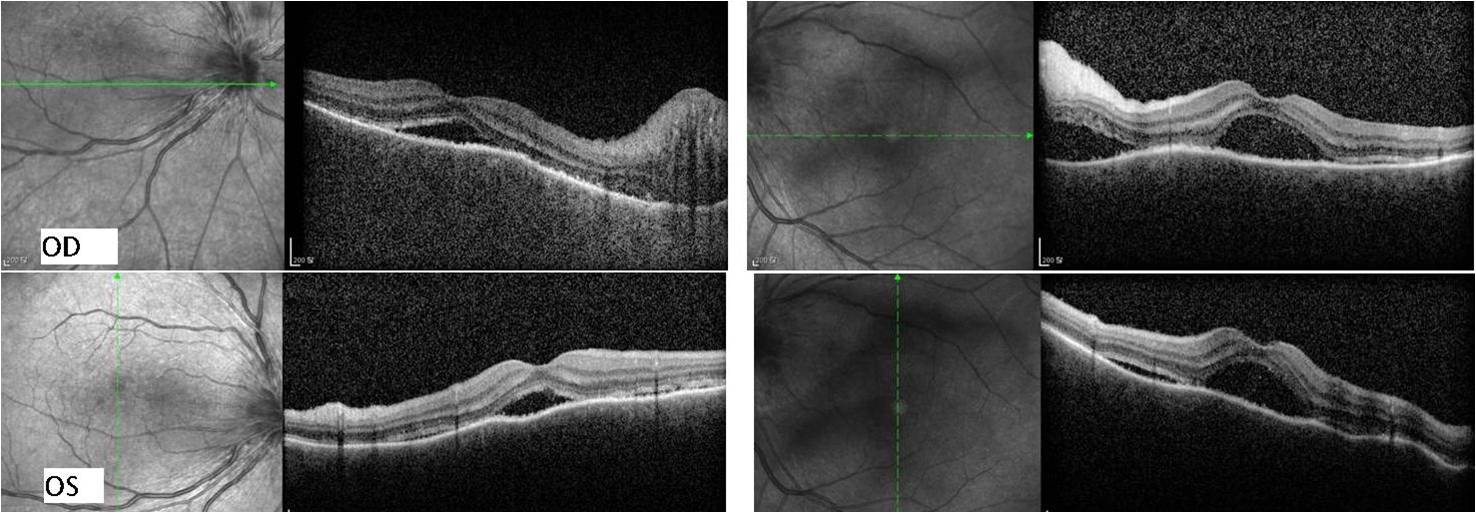
| Discussion | 75/M C.C: 한달 전부터 갑자기 발생한 Both visual disturbance 와 Both hearing disturbance 안구의 외상, 수술이나 이전 병력 없음. Answer: (Incomplete type) Vogt-Koyanagi-Harada syndrome Image설명: 3D FLAIR images에서 양쪽 eyeball의 홍채의 대칭적인 thickening과 조영증강이 있고, posterior eyeball의 mild and uneven thickening and enhancement가 있어 uveitis가 있어 보인다. 오른쪽 안구의 optic disc의 nodular enhancement가 있다. 또한 FLAIR high SI with enhancement in both inner ears 가 있어 양측의 labyrinthinhitis도 같이 있는 것으로 생각되는 환자이다. Spectral OCT (Optical coherence tomography)상에서 Subretinal fluid collection in both eyes 도 보이고 있는데, VKH syndrome에서 동반될수 있다. Review: < Vogt-Koyanagi-Harada syndrome > • Rare, multisystem autoimmune disorder – Melanocyte-containing organs, such as eyes, meninges, CNS, skin, membranes, mucosas and inner ear (cochlea and vestivular system) – Mechanism: T helper cell mediated autoimmune attack • Episode of bilateral posterior uveitis after prodromal sx similar to aseptic meningitis • m/c increasingly pigmented ethnic groups such as Native Americans, Hispanics, Asians, Asian Indians, and Middle Eastern descent • • 4 stages – Prodromal stage: flu-like symptoms (HA, nausea, meningism, dysacusia, and tinnitus) – Acute uveitic stage: onset of blurring of vision in both eyes – Convalescent stage: gradual depigmentation of the choroid, skin changes, including vitiligo, alopecia and poliosis – Chronic recurrent stage: repeated bouts of uveitis • Diagnostic Criteria of VKH syndrome 1) Absence of hx of penetrating ocular trauma or surgery preceding uveitis 2) Absence of clinical or laboratory Hx of other type of ocular dz 3) Bilateral ocular involvement 4) Presence of neurological/auditory findings 5) Cutaneous findings • Complete type: all clinical criteria • Incomplete type: ocular involvement filling up the three first criteria + neurological and auditory alterations or cutaneous alterations • Possible type: only ophthalmological criteria References> 1) Alaoui FZ, Benamour S, El Kabli H, et al. Vogt-Koyanagi-Harada syndrome: Eight cases. Rev Med Interne. 2007;28(4):250-4 2) Rao NA, Sukavatcharin S, Tsai JH. Vogt-Koyanagi-Harada disease diagnostic criteria. Int Ophthalmol. 2007, 27(2-3):195-9 3) Ondrey FG, Moldestad E, Mastroianni MA, et al. Sensorineural hearing loss in Vogt-Koyanagi-Harada Syndrome. The Laryngoscope 2006;116:1873-1876 |
| Correct answer |
Correct Answer
Semi-Correct Answer |