HOME > Weekly Case > Weekly Case
Weekly Case
종결
Case No. 311
2013-08-01~2013-08-31
출제자 : 황승배
Hit : 344
| Period | 2013-08-01~2013-08-31 |
|---|---|
| Diagnosis | Ulegyria |
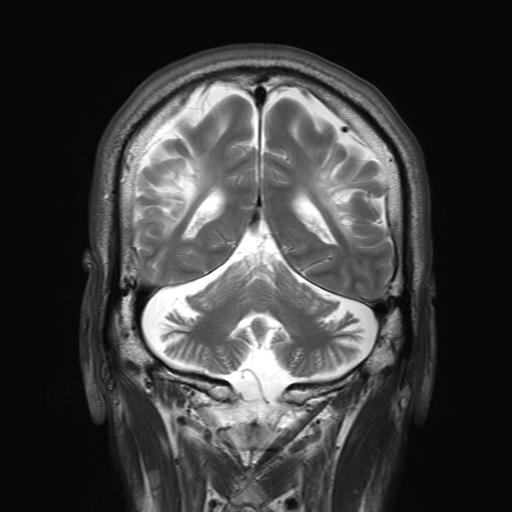
| Clinical information | 43/M C/C : Seizure 진단은? |
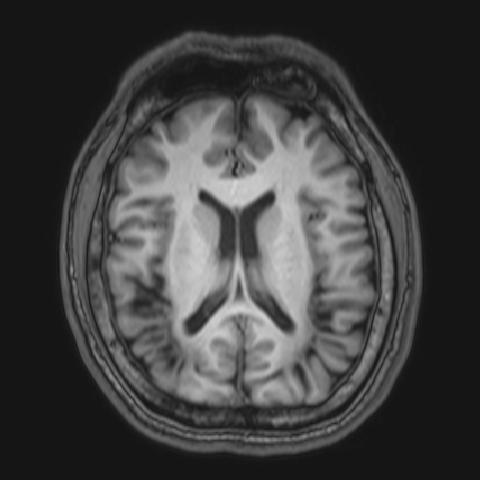
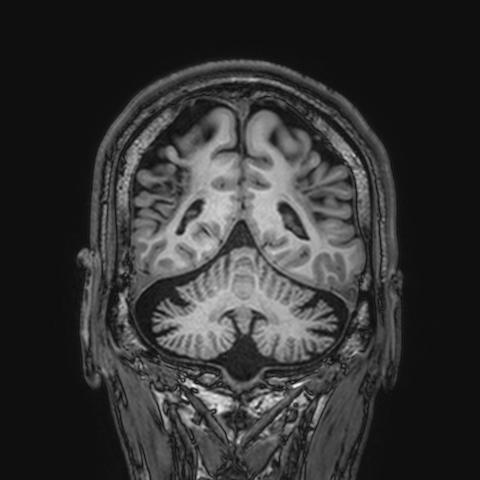
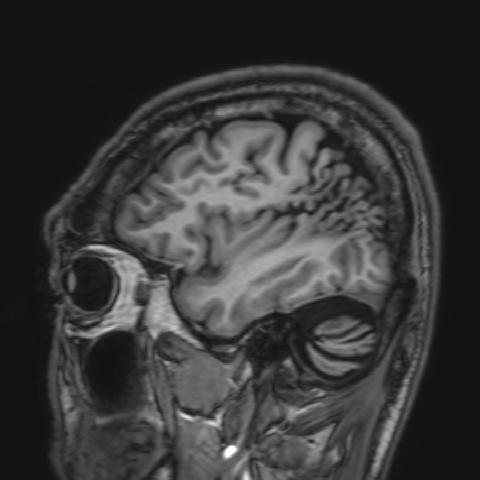
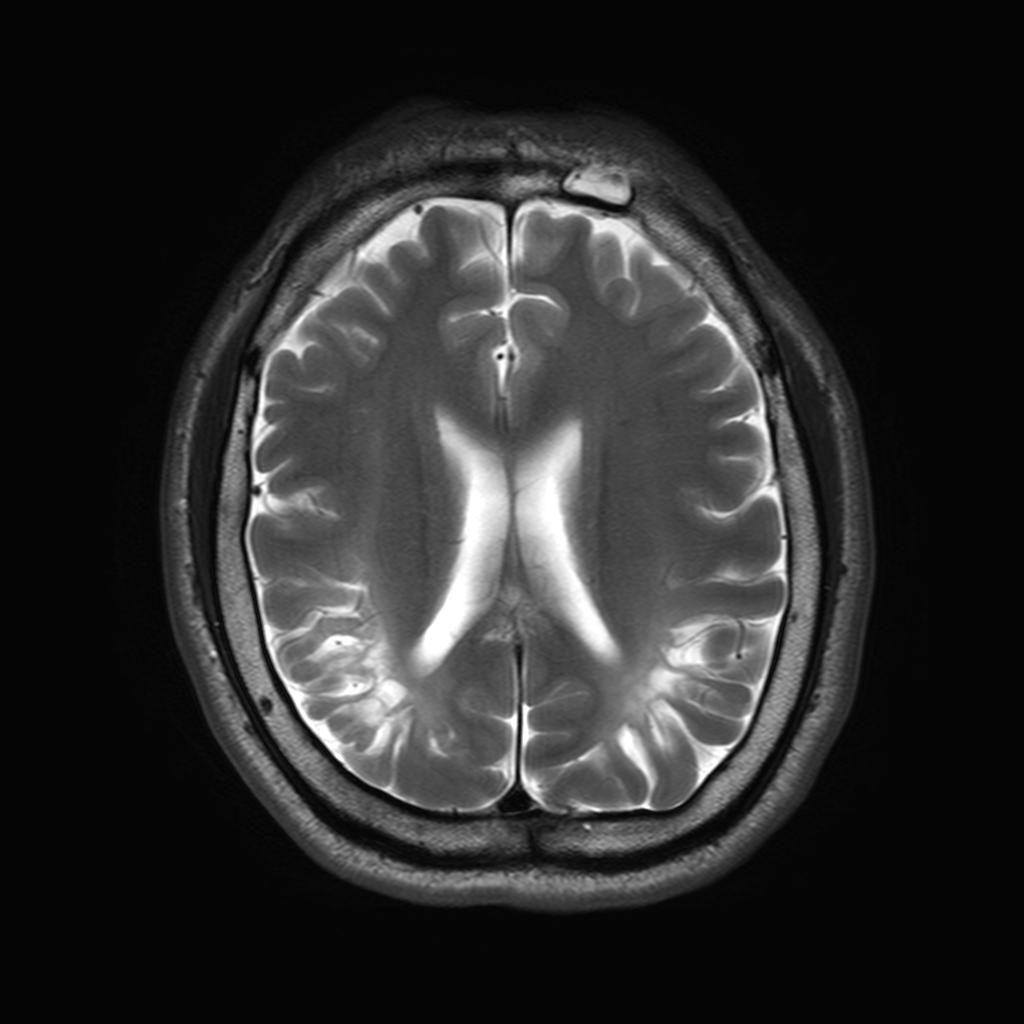
| Discussion | Ulegyria 43/M C/C : Seizure 영상소견 : Both parietal lobe의 watershed areas에 mushroom shape의 gyral atrophy가 있으며 인접한 subcortical white matter에 T2 signal change가 동반되어 있음. Ulegyria Two basic patterns of cerebral injury in the term infant 1) Mild to moderate insult (prolonged partial hypoxia-ischemia) - cortical and subcortical injury in a watershed parasagittal distribution 2) Acute profound episodes of asphyxia (near total asphyxia) - cause injury in the thalami, basal ganglia, hippocampi, dorsal mesencephalic structures, and perirolandic cortex with relative sparing of the rest of the cortex Milder form of hypoxic-ischemic encephalopathy - The injury comprises cortical necrosis involving the immediately subjacent white matter with characteristic distribution, encompassing the parasagittal, superomedial areas of the convexities bilaterally, with posterior (parietooccipital) more involved than anterior regions. - Chronic phase ; the cortex of the affected gyri shrinks and the term ulegyria is used to define the type of cortical abnormality characterized by atrophy at the depth of the sulci and relative sparing of the crest of the gyri. The term ulegyria was introduced by Bresler in 1899, from the Greek word ουλη (scar) One of the patterns of hypoxic-ischemic encephalopathy, typically affecting full-term infants, consists of parasagittal lesions and ulegyria. The damage usually involves the deeper sulcal portion while sparing the apex, thus resulting in the so-called mushroom gyri characteristic ulegyric pattern. The subcortical white matter almost always undergoes atrophic changes and gliosis. In full-term neonates, prolonged milder hypoxic events and cerebral perfusion disturbances result in watershed lesions. Ulegyria is a late phase of watershed cerebral injury. The distribution of ulegyria was variable, occurring mostly in the watershed areas between the major cerebral arteries MRI criteria of ulegyria (1) Atrophy of the affected gyri that are small and depressed relative to the surface of the normal cortex. They are located in the watershed areas between the territories of the major cerebral arteries. The atrophy mainly involves the deep portion of the affected convolution sparing the apex, thus resulting in mushroom-shaped gyri. The cortex in the deep portion of the sulci is always thin with abnormal signal, whereas the thickness and signal intensity of the crown of the same gyri is normal. (2) Subcortical white matter signal hyperintensity in T2 and FLAIR sequences. (3) Wide sulci between the affected convolutions that are more pronounced in the deeper portions. Reference Nikas I, Dermentzoglou V, Theofanopoulou M, Theodoropoulos V. Parasagittal lesions and ulegyria in hypoxic-ischemic encephalopathy: neuroimaging findings and review of the pathogenesis. J Child Neurol 2008:23;51-58 |
| Correct answer |
Correct AnswerSemi-Correct Answer |