HOME > Weekly Case > Weekly Case
Weekly Case
종결
Case No. 236
2011-04-04~2011-04-28
출제자 : 최현석
Hit : 470
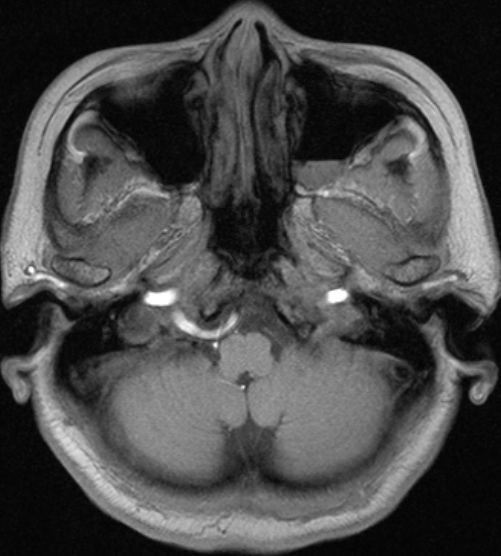
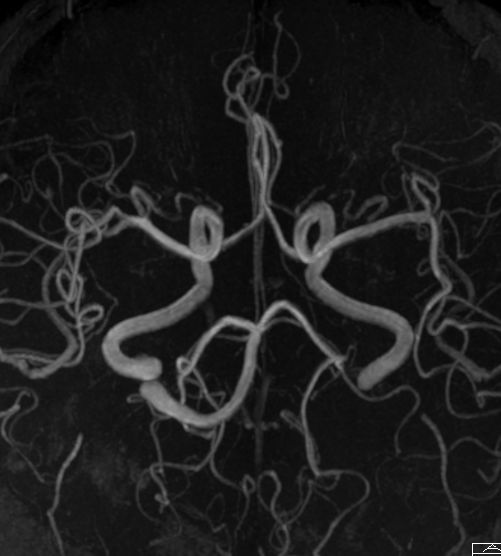
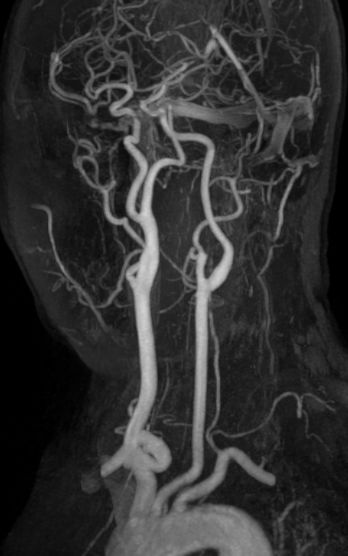
| Period | 2011-04-04~2011-04-28 |
|---|---|
| Diagnosis | |
| Clinical information | Incidental finding. |
| Discussion | Persistent hypoglossal artery Vasculogenesis begins on the 13th day of embryonic life (E13). Around E21 small intersegmental vascular sprouts appear along the posterolateral aspect of the primordial aorta and grow into the spaces between the somites. In the neck, the seven cervical intersegmental arteries (CIAs) develop longitudinal branches which anastomose forming the longitudinal neural artery (LNA) on E30. The first six CIAs regress in caudo-cranial succession, leaving the LNA which will become the VA. The seventh CIA persists, forming the subclavian artery. The paired LNAs merge on E31 to form the basilar artery. Until the posterior communicating artery forms, intracranial anastomoses are maintained between the primordial aorta and LNA by the hypoglossal, otic and trigeminal arteries which usually regress by E33. Persistence of any of the extracranial primitive carotid-vertebrobasilar anastomoses result in an atypical origin of the VA from the carotid arteries. Types of persistent carotid basilar anastomoses Persistent trigeminal artery: from intracavernous ICA to BA (basilar artery), most common Persistent otic artery: from petrous ICA to BA (through internal auditory canal) Persistent hypoglossal artery: from cervical ICA to BA (through hypoglossal canal), rare Proatlantal intersegmental artery: from cervical ICA to BA (through foramen magnum) |
| Correct answer |
Correct AnswerSemi-Correct Answer |